










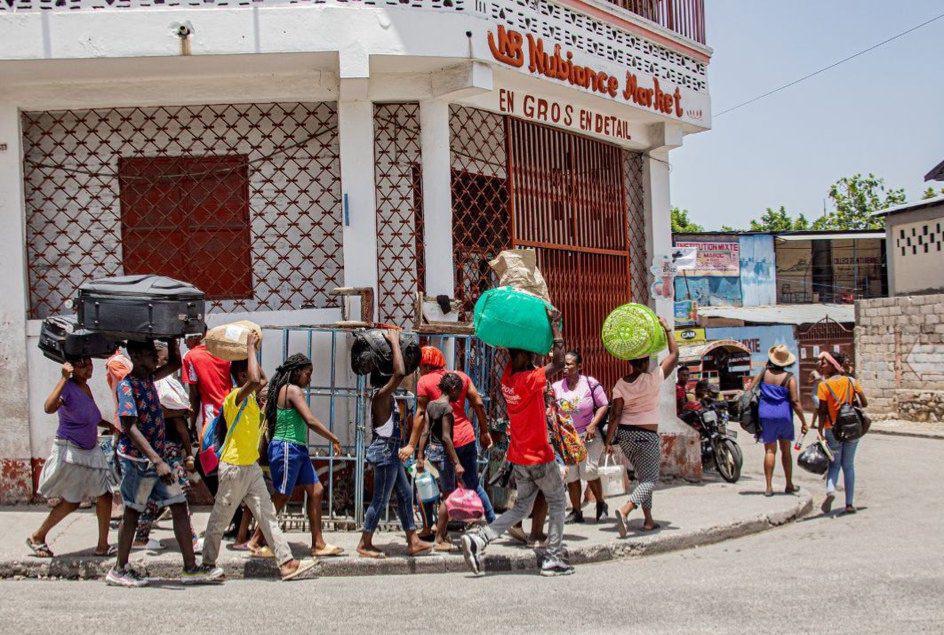


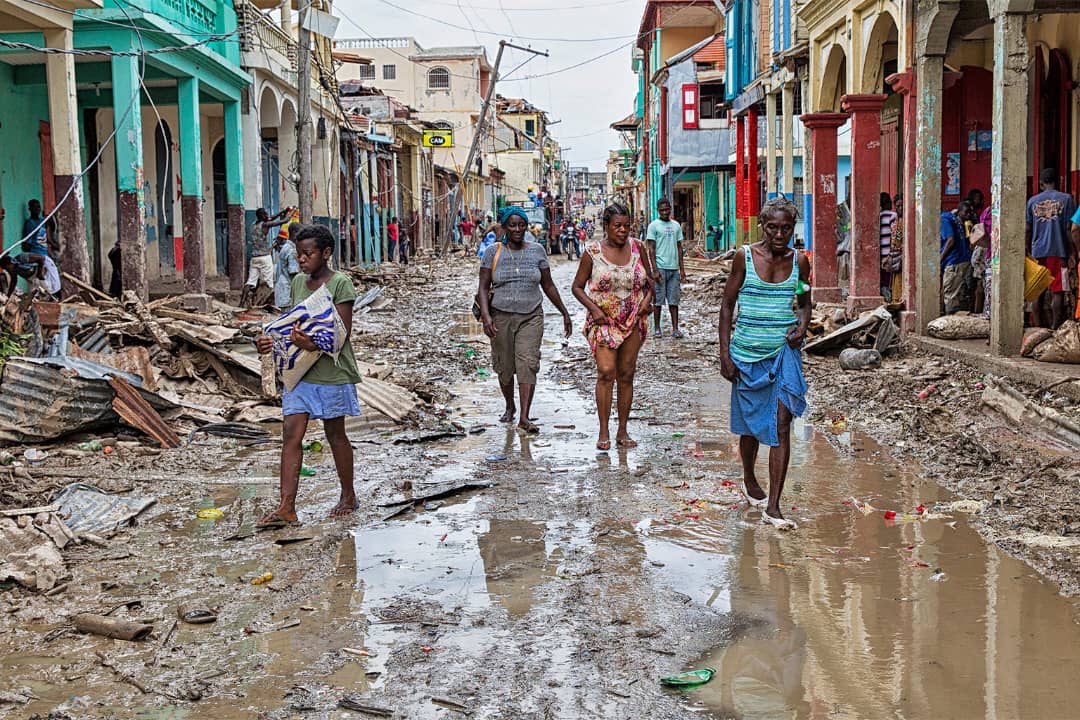
New York, November 8, 2025.- The UN Security Council has highlighted Haiti's critical example to illustrate the new vicious circle that links climate, environment and global insecurity. In a country already plagued by gang violence and massive deforestation (98% of the forest cover disappeared), climate change acts as a crisis amplifier. Land erosion, water pollution and the recent passage of Hurricane Melissa cause humanitarian disasters, forcing vulnerable populations to flee and cross areas controlled by armed groups to seek refuge in improvised camps. This superimposition of climate shocks and insecurity is re-emerging the spectrum of cholera, transforming the environmental crisis into a human and security crisis.
This phenomenon of cross-crisis reveals a devastating dynamic: insecurity (violence, displacement) leads to greater exposure to climate risks (floods, landslides), and climate shocks (dry, storms) in turn exacerbate competition for resources and social tensions. The representative of civil society, Maranata Dinat, stressed that the environment is no longer a mere collateral victim, but a central vector of insecurity. Haiti thus embodies a country where peace cannot settle on devastated lands.
Faced with the magnitude of the environmental damage caused by the conflicts, international lawyer Charles C. Jalloh denounced the inadequacy of current international law. The Geneva Conventions, designed primarily for inter-State wars, offer only a threshold of proof « too high and too imprecise » to punish devastation. Mr. Jalloh called for major reforms to fill this legal gap, including the inclusion of massive infringements of nature in international criminal law and the explicit recognition of the crime of ecocide, as well as war crimes or crimes against humanity.
The conclusion of the experts of the United Nations Environment Programme (UNEP), including its Executive Director, Inger Andersen, is without appeal: to break this vicious circle, States and organizations must stop dealing separately with humanitarian, climate and security crises. The response must be comprehensive, focusing on ecosystem restoration, sustainable management of natural resources and strengthening local governance. The idea is that the protection of the planet is intrinsically linked to the prevention of war; « each fraction of degree avoided » Global warming is an additional opportunity for peace and prosperity.
W.A.