

















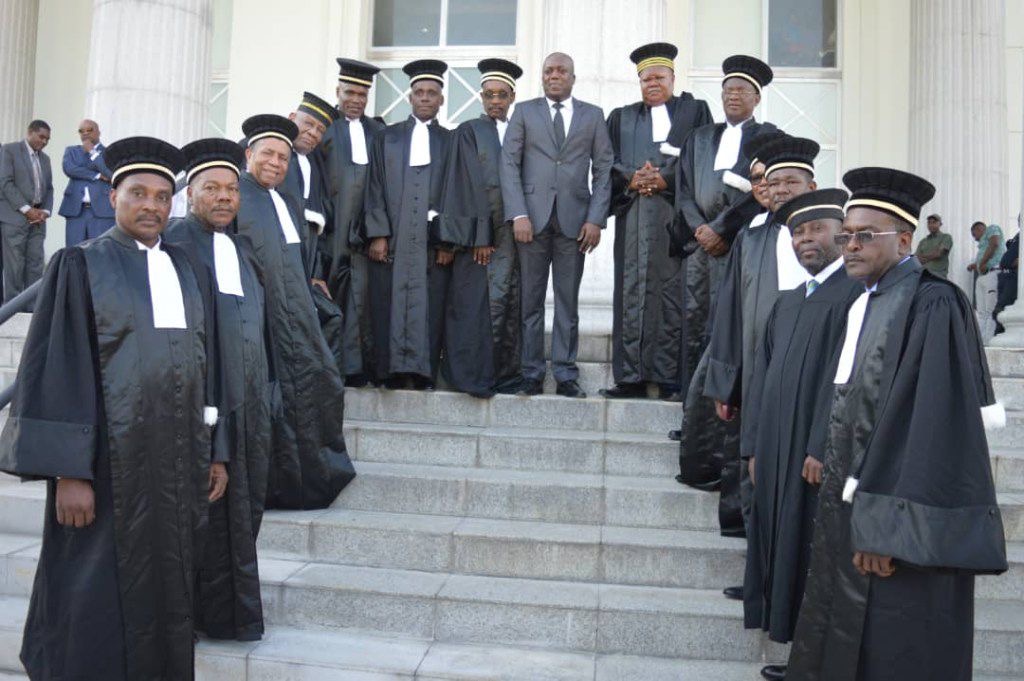
Port-au-Prince, 25 July 2025.- While the Ministry of Justice and Public Security (MJSP) is announcing the opening of a national competition to train a new promotion of student magistrates, 59 young judges trained since December 2024 are making an alarm call against their non-integration into the judicial system. A situation that, combined with the presence of unslave magistrates, highlights the worrying flaws of the Haitian judiciary.
The Ministry of Justice and Public Security has announced the opening of a national competition in the country's five appeal courts (Port-au-Prince, Cap-Haïtien, Hinche, Gonaïves and Cayes) for the recruitment of a new promotion of student magistrates. This initial 16-month training, provided by the École de la Magistrature (EMA), aims to train multi-purpose, competent and capable magistrates to perform their judicial functions.
Yet this announcement coincides with a silent institutional crisis. Fifty-nine magistrates, who graduated from EMA since December 2024, are still waiting for their official appointment. Their transitional status, between the lawyer and the judiciary, prevents them from fully exercising in one or the other field, leading them to a precarious employment situation.
These young professionals affirm their willingness to serve Haitian justice, especially in a context of chronic understaffing in the courts. They denounce a clear contradiction between the organisation of a new competition and the continued inaction of the authorities with regard to their integration, which is indispensable for the proper functioning of the judiciary.
To this problem is added another scandal recently revealed by the Supreme Council of the Judiciary (CSPJ): the presence of judges in office, but not sworn in. This serious dysfunction casts a shadow on the legitimacy of certain judicial decisions and accentuates the perception of a judicial system in debandade.
Haitian justice is going through a critical period. In the face of institutional challenges, staff shortages and democratic emergencies, the immediate appointment of the magistrates on standby appears to be a pressing necessity. Otherwise, even the best training will find it difficult to bridge the gap between judicial ambition and administrative reality.
W.A.