










Pétion-ville, April 3, 2026.- While the Haitian state announced, this Thursday, April 2, new tariff grids for public transport, the reality on the roads remains very different. The increase in fuel prices (+29% for petrol and +37% for diesel) has prompted the authorities to regulate tariffs, but the lack of security and illegal toll stations imposed by armed groups complicate the application of these measures.
In the metropolitan area, several routes are now set at 75 gourdes, notably between Port-au-Prince and Carrefour, Bon Repos, Croix-des-Bouquets or Pétion-Ville. Other routes remain at 50 gourdes, for areas such as Delmas 65, Canapé-Vert or the airport, while longer connections reach 115 gourdes for Cabaret, 180 for Arcahaie and 240 for Kenscoff. In provincial cities, official rates range from 750 gourdes for Saint Mark to 3,150 gourdes for Jérémie or Port-de-Paix.
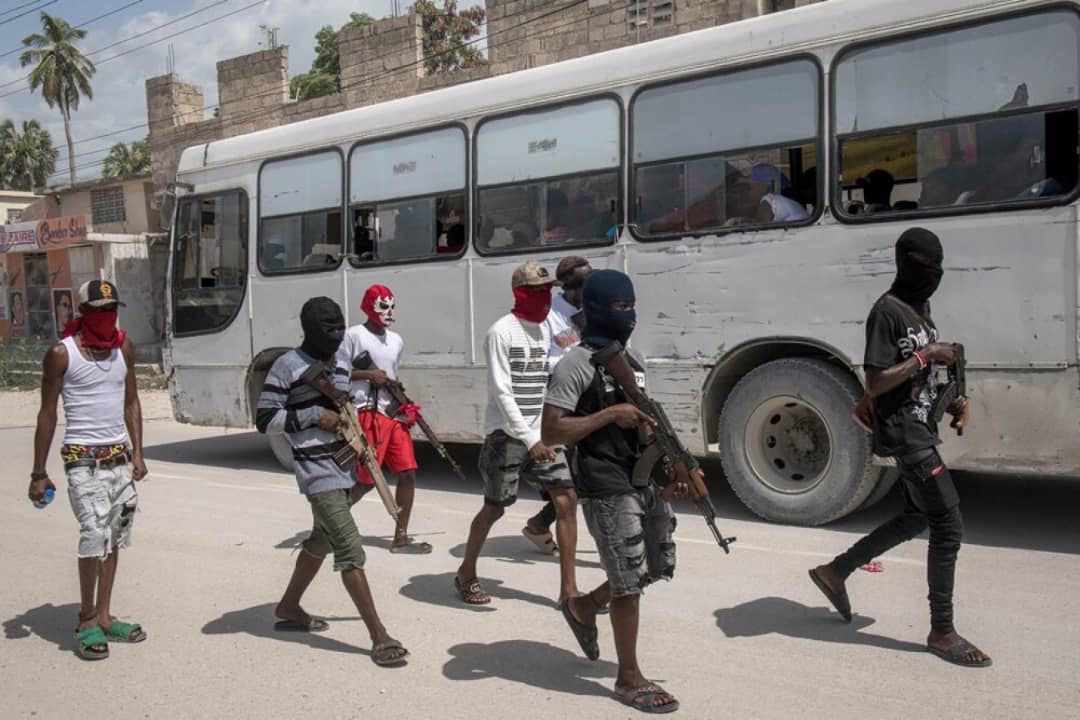
In the field, drivers face a different reality. Many strategic axes are controlled by armed groups that impose informal tolls, raising the real cost of journeys. Each passage can represent several thousand gourdes for a vehicle and tens of thousands for a cargo truck. These checkpoints sometimes follow one another on the same route, transforming transport into an expensive and unpredictable route.
In the face of these pressures, carriers pass these charges on to passengers. The actual tariff thus far exceeds the official price, illustrating the difference between state regulation and daily practice. The parallel system that is being established places the cost imposed by armed groups at the centre of the economy of public transport.
By proposing tariffs without taking into account illegal tolls, the State limits its control to partial regulation. As long as these costs continue to weigh on the roads, the effective price will remain determined by the negotiation at the crossing of the dams, reflecting the double constraint on Haitian public transport.
R.J.