

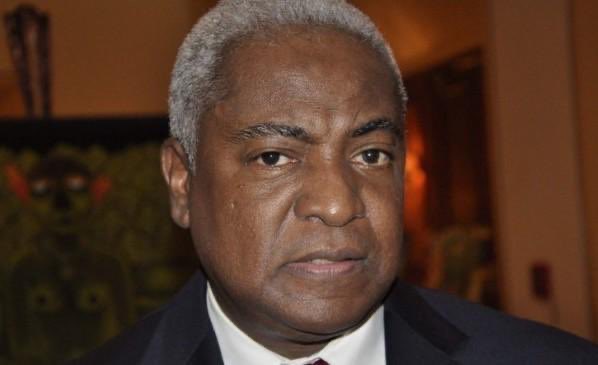
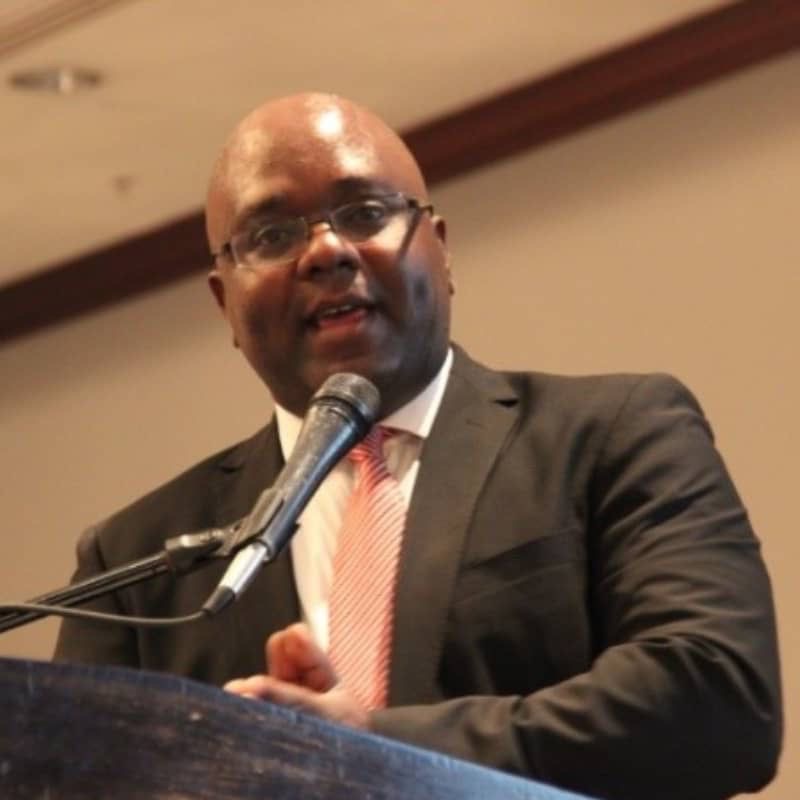








Brazilian Professor Ricardo Seitenfus
Port-au-Prince, January 29, 2026.- Guest of Magik 9 this Thursday, January 29, on the occasion of the publication of his book Written against the tide over time, Brazilian professor Ricardo Seitenfus makes a severe observation of the Haitian crisis. Returning to the major political sequences since 2004, he denounces the repeated failures of the international community, the exclusion of the people from the democratic game and the inability of Haitian elites to break with a model of crisis management based on force rather than on popular legitimacy.
A book addressed to all, but especially to Haitian politicians
Ricardo Seitenfus asserts that his work is aimed at the entire society, but primarily at Haitian politicians. Through a series of texts published over nearly twenty years, he revisited the 2004 crisis, which he described as a political and diplomatic disaster. According to him, the opposition then made a serious mistake in believing that it would have come to power after the departure of President Jean-Bertrand Aristide, while he was ultimately exercised by the international.
Electoral crises and exclusion of the people
The former OAS representative recalls that the Haitian political crises have their origin in failing electoral processes, strongly influenced by outside actors and broken political parties. He denounced the systematic exclusion of the people and voters, who were the main ones affected by the decisions taken on their behalf. « As long as the people stay away, the same crises will be repeated », he warned, speaking of a destructive political cycle maintained for nearly forty years.
Forty years of transition: the time of the balance sheet
As February 7, 2026, a symbolic date marking forty years of political transition in Haiti, Ricardo Seitenfus calls for a collective critical review. He believed that the country had never really broken with a model of crisis resolution based on coercion, including when the international community claimed to promote dialogue and institutional reconstruction.
Recognized failure of international aid
The university recalls having denounced in 2010 the ineffectiveness of international aid in Haiti, criticisms long ignored before being widely admitted a decade later. According to him, the proliferation of NGOs, the waste of resources and the lack of sustainable reconstruction have contributed to aggravation of the situation, now considered more catastrophic than in 2004.
Reforming the political system to break the impasse
Among the avenues put forward in his book are the profound reform of political parties, which are considered too numerous and poorly structured, the establishment of democratic guarantees and the redefinition of the national political pact. Ricardo Seitenfus insists that he does not consider himself an actor in the problem, but as a friend of Haiti, concerned with historical truth and lasting solutions.
W.A.