


















©️Stéphane Daïley Lubin
Washington, 25 August 2025.- While the Multinational Security Support Mission (MSS) is struggling to stabilize Haiti, the United States is announcing its intention to double the foreign contingent and to assign mission command to a country other than Kenya. A strategic repositioning that confirms Washington's central role in crisis management, but also raises questions about the real purpose of this commitment.
For several months, the United States has been the real architects of international intervention in Haiti. Initial support for Kenya's deployment, mission funding, diplomatic advocacy at the United Nations: nothing was done without Washington's leadership. Now, the Trump administration goes further by redrawing the contours of the MSS.
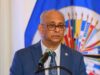
The statement of Kimberly J. Penland, Deputy Head of Mission of the United States of America at the OAS, marks a turning point: not only is Washington planning to increase the number of the mission, but he could entrust his command to another country, to breathe new life and credibility into a force criticized for its inefficiency. This initiative, aligned with a recommendation of the Secretary-General of the United Nations António Guterres, aims to provide Haiti with logistical and financial resources comparable to a peacekeeping operation.
But this reorientation is not without risks. Confusion on mission leadership could exacerbate doubts as gangs continue to expand their grip. As Albert Ramdin, Deputy Secretary General of the OAS, recalled, a political vacuum awaits Haiti upon the expiry of the mandate of the Transitional Presidential Council in February 2026. Without clear political agreement or a credible electoral calendar, foreign intervention may be a simple bandage on a bereaved wound.
In Port-au-Prince, American diplomacy nevertheless assumes its choice. At a press conference last week, Henry Wooster, US business officer, acknowledged the need for a « Adjustment » More resources, more authority, more results. While welcoming Kenya's contribution, Washington is already preparing for the next, aware that international opinion demands more than a security status quo.
In essence, one question remains: do the United States seek to guarantee the stability of Haiti or to preserve, above all, its own influence in the Caribbean? In a country where foreign interventions leave a bitter taste unfinished, the issue is not only military. It is primarily political: restoring Haitian sovereignty by helping Haitians regain control of their future.
W.A.