
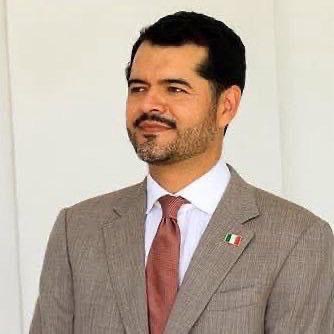



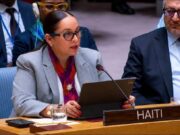













Director of Immigration and Emigration, Antoine Jean Simon Fénélon•©️Primary
Port-au-Prince, 10 December 2025.- During the 30th edition of the Nation's Tuesdays, the Director of Immigration and Emigration, Antoine Jean-Simon Fédélon, presented the Ikat, a new electronic system intended to replace the traditional boarding and disembarkation paper form. Developed with IHSI, Customs and the Ministry of Public Health, this project aims to modernize the collection of migration data, strengthen national security and smooth the passage of travellers.
The Director of Immigration explained that Ikat is an important step in border services reform. The scheme replaces the paper form historically used to record the migration, customs and health data of travellers.
Now all this information will be entered online, up to 72 hours before the trip, but also possible one hour before the departure.
A tool for managing migration flows
According to Antoine Jean-Simon Fénélon, Ikat strengthens an essential regal function: the control of entry and exit from the territory.
The system facilitates the reading and management of migration flows and allows relevant institutions, including Tourism, Justice and the National Police, to access, upon formal request, statistical data essential for public policy planning.
Functioning and benefits for travellers
The Ikat form applies to all travellers, whether they travel by air, sea or land. Each person receives a code RQ, printable or registrable on the phone, which will be scanned at the border point to expedite processing. Families can complete multiple forms in one session, with a QR code generated for each member. The system also allows you to modify the travel route, thanks to a dedicated space on the platform.
The Ikat project is currently in a pilot phase. Once the legal framework is adopted, a period of 120 days is foreseen before the mandatory and strict implementation.
Unprecedented technological progress in the region
For the Director of Immigration, Ikat place Haiti « at the highest level of international standards », being one of the few States in the region to completely dematerialize its boarding and disembarkation forms. It is, he says, an innovative tool for national security and for improving the experience of travellers.
W.A.