
















©️MdE
Port-au-Prince, December 16, 2025.- The Directorate of Climate Change (DCC), in collaboration with the management team of the CBIT-Haiti project of the Ministry of the Environment (MdE), with the financial support of the GEF via the United Nations Development Programme (UNDP), organized on December 12 in Port-au-Prince a national workshop on good practices and lessons learned from the CBIT-Haiti project. This initiative aims to consolidate the national system of Measurement, Notification and Verification (MRV), to guide public policies and to strengthen Haiti's credibility in international climate negotiations.
The national workshop on good practices and lessons learned from the CBIT-Haiti project brought together executives of the Ministry of Environment and representatives of sectoral public institutions around a common objective: to disseminate innovations, analyse difficulties encountered and capitalize on lessons learned from the implementation of the project. Exchanges have served to inform future planning of the MRV system, as well as the country's climate communication and governance strategies.
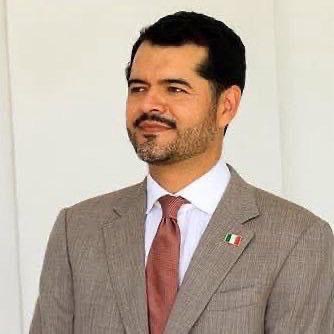
In opening the work, the Director General of MoE, the Ing-Agro Joseph Emmanuel Philippe, recalled Haiti's high vulnerability to natural phenomena and the effects of climate change. He stressed that the outcome of the workshop was a strategic lever to strengthen the country ' s position in multilateral negotiations and facilitate the mobilization of financial, technical and technological resources essential for green and sustainable growth.
The event is also part of the political will of Minister Jean Pierre and the direction of the CPT-Fils-Aimé government to give a central place to environmental issues. Stressing gender inequality, highlighted by Haiti's 163rd out of 170 rankings in the UNDP Gender Inequality Index (2021), Mr. Philippe demanded the effective application of the women's quota in the Ministry's activities, especially in the fight against climate change, considering that the inclusion of women and children is a condition for sustainable results.
For his part, the Head of the Greenhouse Gas Inventory (INGES) at the Mining and Energy Office, Mr. Betonus Pierre, presented the inventory as a key tool for assisting in public decision-making. He recalled that instruments such as the NAPA, the CDN or the Climate Prosperity Plan are based on reliable data from the IINGES. The CBIT-Haiti project, which focuses on institutional capacity building, the quality of climate data and the monitoring and evaluation of the MRV system, thus appears to be an essential pillar of climate transparency and public action in Haiti.
W.A.