



















By Quetya Aubin
In a constantly changing world, the global South, this set of developing countries in Africa, Latin America, Asia and Oceania, continues to navigate between hopes for prosperity and bitter realities of impoverishment. Since independence, these nations have sought to assert themselves on the world economic scene, but the dynamics of international trade have often thwarted their ambitions. Professor Claude Albagli, a leading economic development specialist and president of the CEDIMES Institute, will address these issues at a webinar to be organized by the Centre for Research in Management and Development Economics (CReGED) of the Quisqueya University (UniQ) in Haiti, on December 15, 2025. Title « The global South from the deterioration of the terms of trade to demonization: Half a century of hope and disappointment »This conference promises to illuminate half a century of geo-economic transformation. This article aims to contextualize this theme from scientific literature, awakening the curiosity of all for this event which aims to question the future of emerging countries in a context of ecological and technological crises.
The CREGED, the first laboratory in economics-management of UniQ, created in March 2001 within the Faculty of Economic and Administrative Sciences (FSEA), plays a central role in Haitian research in economics and management. It is a Laboratory authorized to host doctoral students by the Doctoral College of Haiti since 2015, following an evaluation by a commission of international experts. It focuses on growth and development strategies, with two main axes: entrepreneurship and innovation, and development financing. His work compares the development policies implemented in Haiti and proposes alternatives for sustainable development. In this context, it has developed a space for scientific consultation and dissemination called « The « CREGED LUNDIS » for the dissemination of economic thinking, management data and research results. This space is a series dedicated to academic exchange that highlights crucial issues for countries like Haiti that are facing persistent economic vulnerabilities.
The deterioration of the terms of exchange, the central concept of the conference, is rooted in the hypothesis of Prebisch-Singer, formulated independently by RaúlPrebisch and Hans Singer in 1950. This theory assumes that the terms of trade – the ratio between export and import prices – deteriorate over time for commodity-exporting countries (typically from the global South) for the benefit of exporters of manufactured goods (from the North).
Under this assumption, primary commodity prices (agricultural, mining, energy) decline relative to industrial products due to factors such as low demand elasticity for raw materials and technological asymmetries. Recent empirical studies covering the period 1900-2015 confirm a secular decline for eleven major amenities, reinforcing the idea that this trend is not a statistical artifact but a structural reality. For the global South, this meant that, after independence, export earnings were eroded, undermining the hopes of autonomous development. As a country like Senegal, dependent on coffee or soya, a persistent decline in international prices would force them to export more to import the same volume of machinery or technology, perpetuating a vicious cycle of underdevelopment.
However, the 1970s brought a counterpoint to the 1973 oil shock, where OPEC blazed commodity prices, temporarily ruining the Prebisch-Singer hypothesis. This reversal illustrated market volatility, but did not reverse the long-term trend. The collapse of the Soviet Union in 1991 then opened the era of triumphant globalization, promoted as the « development ». Trade liberalization, via the WTO and free trade areas, boosted the global export-GDP ratio from 15% to 25% before the 2008 crisis. The benefits for the South as a whole have been tangible: more than 1.2 billion people have emerged from extreme poverty, mainly in China, through relocations and foreign investment. Globalization has promoted economic growth, access to new markets and the diffusion of technologies, improving living standards.
However, the disadvantages are obvious because inequalities have increased, leading to deindustrialisation in the North and excessive dependence on the South, with abyssal trade deficits never before reached as the US billion daily vis-à-vis China. Analyses point out that globalization has exacerbated social and political disparities, promoting economic populism.
Today, we are witnessing accelerated demonization, marked by a decline in domestic markets, economic sovereignism and increased protectionism. The impacts on developing countries are ambivalent. On the one hand, it leads to a reduction in trade and investment flows that can slow growth and innovation; on the other, it encourages self-sufficiency and protects against external shocks.
The VOCID-19 pandemic and geopolitical tensions (such as the war in Ukraine) have amplified this movement, with threatened economic convergence and rising inequalities among nations. For small, export-dependent, low-income countries, this could hinder poverty reduction. In addition, there are environmental constraints as the fight against climate change imposes restrictions on global transport, favouring the relocation of supply chains to reduce the carbon footprint.
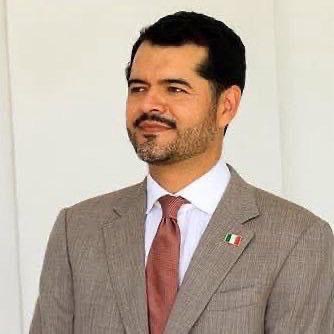
Artificial intelligence (AI) emerges as a disruptive factor in this equation. It accelerates demonisation by making robots impervious to wage costs, encouraging relocation to the North and marginalizing the unindustrialized countries of the South. How, in this unprecedented landscape, can the nations of the South undertake a real takeoff? It is precisely this question that Professor Albagli will try to answer. He has a great expertise that builds on his academic training as a Doctord State in Economics and , former student of Maurice Allais, holder of the Nobel Prize in Economics. Then, he served for 15 years in sub-Saharan Africa and visited more than 80 countries, giving him some international experience.
President of the CEDIMES Institute, a francophone academic federation with sixty delegations, he has directed numerous theses and published various articles and books on mutations in Europe, Africa and Asia. His annual missions to China since 1990 total four years of stay. He has received some decorations in his country and he holds international honours, including that of Chevalier du Mérite National in France. and also distinctions from many foreign countries.
This conference is not just a retrospective; It is a call to rethink development strategies according to the realities of the country and its geopolitical environment. . In a context where Haiti, through CREGED, is looking for alternative socio-economic options, it is not too risky to argue that Professor Albagli's thinking could inspire innovative and effective policies for the country.
Sources
Sarkar, P., & Singer, H. W. (1991). Manufactured exports of developing countries and their terms of trade since 1965. World Development, 19(4), 333-340. https://doi.org/10.1016/0305-750X(91)90180-P
Erten, B., & Ocampo, J.A. (2013). Super Cycles of Commodity Prices Since the Mid-Nineteenth Century. World Development, 44-14-30. https://doi.org/10.1016/j.worlddev.2012.11.013
Rodrik, D. (2017). Population and the economics of globalization (No.. National Bureau of Economic Research. https://www.nber.org/papers/w23559
Wang, Q., Sun, T. & Li, R. Does artificial intelligence (AI) reduce ecological footprint? The role of globalization. About Sci Pollut Res 30, 123948–123965 (2023). https://doi.org/10.1007/s11356-023-31076-5
Quetya AUBIN
Haiti-Antilles Pole, Haiti Science and Society (HaSci-So)
Team of Scientific Partners for Research Communication (E-PSi-CoRe)
quetyaaubin25@gmail.com