













©️OAS
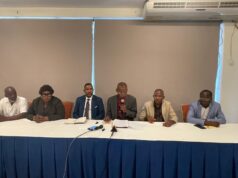
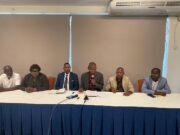
Washington, July 31, 2025.-The Core Group signs its great return to the Haitian political scene. Composed of representatives of the Organization of American States (OAS), the United Nations (UN), the European Union (EU), the United States, Canada, France, Germany, Spain and Brazil, this group of international actors met this week to relaunch its activities, led by the OAS.
At the end of this meeting, a road map for the stabilisation of Haiti was presented. It is structured around five priorities: security, the organisation of elections, the search for political consensus, the humanitarian response and sustainable development. The budget allocated for its implementation is estimated at 1.3 billion gourdes, broken down as follows:
-Humanitarian response: 908 million gourdes;
-Electoral process: $104.1 million
-Stabilisation actions: 96 million;
Political consensus: 5.1 million;
But this new dynamic revives many questions.
Core Group, an already controversial actor
Present in Haiti for several years, the Core Group has often been perceived as an unofficial arbiter of Haitian politics, influencing the appointment of prime ministers or the transitions of power, without real popular legitimacy. Accused of supporting unpopular governments on behalf of the « stability « The group aroused criticism and mistrust, notably after the assassination of President Jovenel Moïse in July 2021.
Its reactivation today, even with new financial and diplomatic commitments, revives fears of poorly calibrated interference.
Security: billions, but few results
Core Group priorities include security, an area where results are slow to be felt. Despite the gradual deployment of the Kenya-led Multinational Security Support Mission (MSS), no effective release of major roads was observed. The population remains under armed gangs, and no major gang leader has yet been arrested or neutralized.
This fact feeds the MSS's perception of inefficiency, whose command is regularly criticized for its lack of experience in managing high-voltage urban areas.
Internal efforts not to be overlooked
In parallel, the Transitional Presidential Council (CPT) and the Government are working to implement the Agreement of 3 April 2024, which provides for a constitutional referendum followed by general elections. These local efforts would require coordinated support rather than substitution by external entities, as has too often been the case.
W.A.