

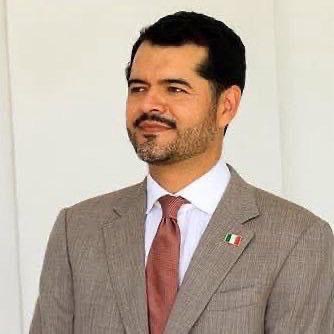



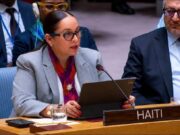










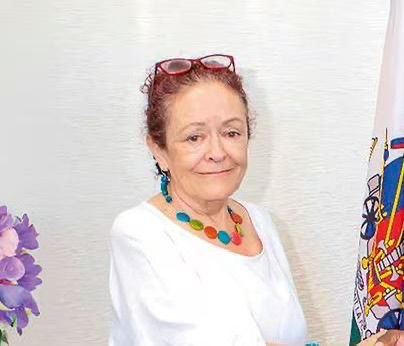
Ambassador of Colombia to Haiti, Vilma Velásquez Uribe
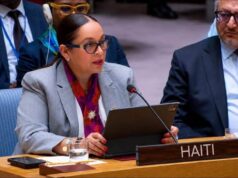
Port-au-Prince, May 5, 2026.- On a visit to Port-au-Prince, a delegation from the Colombian Agency for Reintegration and Standardization, accompanied by Ambassador Vilma Velásquez Uribe, shared Colombia's experience in managing armed groups. It advocates for a pragmatic approach including dialogue, including with criminal groups, in a context where Haiti faces structured and territorialized violence.
Speaker on Magik 9, Ambassador Vilma Velásquez Uribe highlighted the similarities between the security situation in Haiti and that in Colombia. However, it distinguishes between two types of actors: ideologically motivated armed groups, such as some historical guerrillas, and criminal groups without a political agenda, mainly motivated by activities such as drug trafficking, kidnapping and extortion.
According to her, even in the absence of ideology, these groups exercise territorial and economic control that gives them a form of influence in society. « We need to talk to the criminal groups because they are part of the social reality. »she said, referring to the Colombian experience where dialogue has been integrated into post-crisis strategies.
The Colombian Agency for Reintegration and Standardization, equivalent to the CNDDR in Haiti, has thus engaged in discussions with both political armed groups and purely criminal actors, with a view to disarmament, demobilization and reintegration. An approach that recognizes the complexity of the phenomenon and the need for appropriate responses.
For the diplomat, the phenomenon observed in Haiti is part of a regional dynamic, marked by the expansion of drug trafficking as a central driver of criminal economies. Faced with this reality, she stresses the importance of understanding the nature of the groups involved in order to define effective strategies, beyond strictly security responses.
W.A.