
















©️Haiti 24
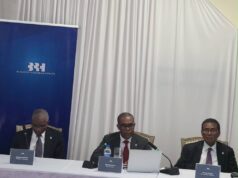
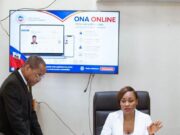
Port-au-Prince, October 5, 2025.- The Bank of the Republic of Haiti (BRH) organized, on Friday 3 and Saturday 4 October, two retreats around the theme: « Support synergies of action and partnership to stimulate innovation, gender equity and access to finance for sustainable opportunities ». The event, organized at the Karibe Convention Center, marks a major step in the national strategy for digitalizing payments and financial inclusion, with a special focus on women and Micro, Small and Medium Enterprises (SMEs).
Under the leadership of Governor Ronald Gabriel, BRH intends to modernize the Haitian financial system through digital technology, a lever that it now considers to be central to relaunching the national economy. Three flagship projects were highlighted: a diagnosis of the Fintech ecosystem with the World Bank, the digitalisation of payments in the informal sector and the launch of the Booster SME III programme to strengthen the competitiveness of small businesses.
According to the Governor, these initiatives are aimed at reducing cash dependency, which is still being used by almost 99% of SMEs, and at stimulating an informal sector representing about 35% of GDP. « HRB action is a coherent whole, bringing together training, research and entrepreneurship »said Ronald Gabriel, stressing the need to unite efforts between public, private and international actors.
For his part, Alfred Hanning, representative of the Alliance for Financial Inclusion (AFI), praised the role of SMEs in digital transformation, stressing that digitalisation offers real opportunities for economic autonomy, especially for women. However, he cautioned against persistent challenges: low digital literacy, inadequate infrastructure and imbalance between supply and demand for mobile financial services.
Present at the opening, the Minister of Economy and Finance, Alfred Fils Métellus, recalled that more than 90% of transactions in Haiti are still carried out in cash, hindering the development of a modern economy. He argued for a collective mobilization to anchor digitalization in everyday practices. « In 2010, the middle class represented 7 per cent of the population, and today it does not exceed 2 per cent. Time to create sustainable opportunities », he said.
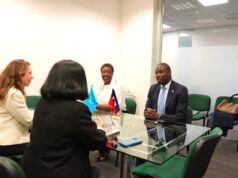
The forum, organized in partnership with UN-Women, the World Bank and the Ministry for the Status of Women, also highlighted the advances of the ICT-Haiti-BRH programme, which has trained for 18 months specialists in cybersecurity, artificial intelligence and data analysis. An artificial intelligence fund will soon be launched to encourage research and development in the fields of health, education, agriculture and finance.
Between conferences, panels and exhibitions, the Karibe has become a true technological village, a symbol of a country in search of a new economic breath. For BRH, the digitalisation of payments represents not only a technical modernization, but a bet on the future: that of a more inclusive, equitable and competitive Haitian economy.
W.A.