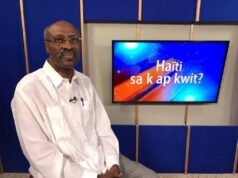


















Me Camille Leblanc
Port-au-Prince, June 18, 2026.- Guest of the Magik Panel this Thursday, June 18, the constitutionalist lawyer Mr Camille Leblanc defended the legitimacy of the intervention of the Executive in the adoption of the electoral decree, in a context marked by the prolonged dysfunction of Haitian institutions. While acknowledging the central role of the Provisional Electoral Council (CEP) in drafting the text, he felt that the comments made by the electoral institution merited consideration in order to correct any provision that might conflict with the Constitution.
The debate around the electoral decree continues to fuel discussions within the Haitian political and legal class. During his visit to the Magik Panel, Mr. Camille Leblanc recalled that the country has been evolving for several years in an exceptional situation marked by the absence of a functional Parliament, which gives the Executive responsibilities usually shared with the legislature.
According to him, in a normal context, a bill drafted by the Executive is submitted to Parliament, which examines it, amends it as necessary and adopts it. However, in the absence of an operational Parliament for several years, the Executive is obliged to assume certain legislative prerogatives alone, notably through the adoption of decrees.
However, the lawyer points out that this does not exempt the authorities from respecting constitutional principles. He considered it legitimate that the CEP had expressed its reservations about certain provisions of the electoral decree published by the Executive, particularly if they differed from the initial draft drawn up by the electoral institution.
Mr Leblanc believes that the CEP's formal approach to commenting on the government is an appropriate institutional response. In his view, any provision that might violate the Constitution should be reviewed before bringing about legal challenges or remedies that could further undermine the electoral process.
He also recalled that the 1987 Constitution provided for the establishment of a permanent Electoral Council, an institution that had never been established despite several favourable opportunities. Pending this institutional normality, the Provisional CEP carries out the same fundamental tasks, including preparing draft texts for the elections.
For Leblanc, therefore, the CEP remains the competent body for drafting bills or electoral decrees. However, in the current context of parliamentary vacancies, it is for the Executive to proceed with the adoption of the text. However, this situation should not lead to the removal of constitutional concerns raised by the electoral authority.
The lawyer thus pleads for a technical dialogue between the government and the CEP in order to examine the points at issue. Such an approach would, in his view, strengthen the legality of the electoral framework and prevent possible institutional or judicial conflicts before the next elections.
W.A.