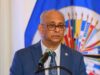


















Dr. Jean Hugues Henrys
Port-au-Prince, le 18 juin 2026.- À quelques jours du congrès annuel de l’Association Médicale Haïtienne (AMH), prévu le vendredi 26 juin à l’Hôtel Montana, le Dr Jean Hugues Henrys a dressé un constat préoccupant de l’état du système de santé en Haïti. Invité du Panel Magik sur Magik 9, le médecin a évoqué l’effondrement de plusieurs infrastructures hospitalières majeures, les difficultés de formation des professionnels de santé et l’aggravation de ce qu’il qualifie d’« insécurité sanitaire « , appelant à une prise de conscience nationale et à une réflexion collective sur l’avenir de la médecine haïtienne.
Le congrès de l’AMH se déroulera autour du thème « La médecine haïtienne : enjeux et perspectives « . Selon le Dr Henrys, cette journée de réflexion sera structurée autour de trois grands axes.
The first will focus on the memory and evolution of Haitian medicine in recent decades. The aim is to recall the major advances made by professionals in the sector despite the many difficulties in the country. In particular, the doctor cited the introduction of oral rehydration serum, which has significantly reduced infant mortality from diarrhoea, as well as Haiti's pioneering role in early HIV research.
The second block will focus on the current challenges of the health system. Dr. Henrys described an extremely difficult situation characterized by the insecurity, closure or inaccessibility of several major hospital centres and the daily obstacles faced by patients such as healthcare professionals.
« Tout est sens dessus dessous « , a-t-il résumé, soulignant que de nombreux citoyens ont désormais des difficultés à accéder aux soins, tandis que les médecins peinent à exercer dans des conditions normales.
Among the infrastructure affected, he cited the Hospital of the State University of Haiti (General Hospital), the Bernard Mevs Hospital and the University Peace Hospital, which played a crucial role in the management of emergencies and the training of future doctors.
The practitioner also cautioned against the country's limited ability to respond to certain serious medical emergencies, including heart attacks. According to him, several structures that previously had the necessary equipment and personnel are no longer operational or difficult to access.
This situation also affects medical training. Because university hospitals serve as places of internship and specialization are severely disrupted, students and young doctors face serious difficulties in their practical learning. Even distance education faces recurring problems of Internet access and technical constraints in the country.
The third part of the Congress will be oriented towards the future and the transformations that are currently redefining medical practice around the world. Participants will consider, among other things, the integration of artificial intelligence, the development of telemedicine and new perspectives that could influence the Haitian medical sector in the coming decades.
Beyond the alarming diagnosis, Henrys believes that this meeting is above all a call for action. In the face of insecurity and the gradual weakening of the health system, he called for a collective awareness of the seriousness of the situation.
« Cette journée est un acte de foi dans le pays et dans le secteur médical « , a-t-il déclaré, affirmant que les professionnels de santé refusent de céder au découragement et entendent continuer à chercher des solutions pour préserver et reconstruire le système sanitaire haïtien.
W.A.