
















Lenor Baldometer, Émilien Blaise and Eddy Rémy
Port-au-Prince, December 18, 2025.- The 19th edition of Crafts in Feast, organized by Le Nouvelliste and the Institute for Research and Promotion of Haitian Art (IRPAH), will be held on 20 and 21 December in Pétion-Ville, under the theme « Creation, production ». A few days before the event, three artisans, coming from Léogâne, Jacmel and Noailles, delivered on Radio Magik 9 a poignant testimony about the major obstacles that are currently weakening Haitian craftsmanship: insecurity, lack of opportunities and difficulties in transport.
A veritable showcase of the creativity and richness of Haitian traditions, Artisanat en Fête has been imposing for nearly two decades as a must-see for the artisans of the country. This 19th edition will take place on Saturday 20 and Sunday 21 December 2025, at the École des Frères de l'Instruction Chrétien, Place Saint-Pierre, in Pétion-Ville.
Guests this Thursday on Radio Magik 9, three artisans who will exhibit at the event highlighted the difficult realities they are facing.
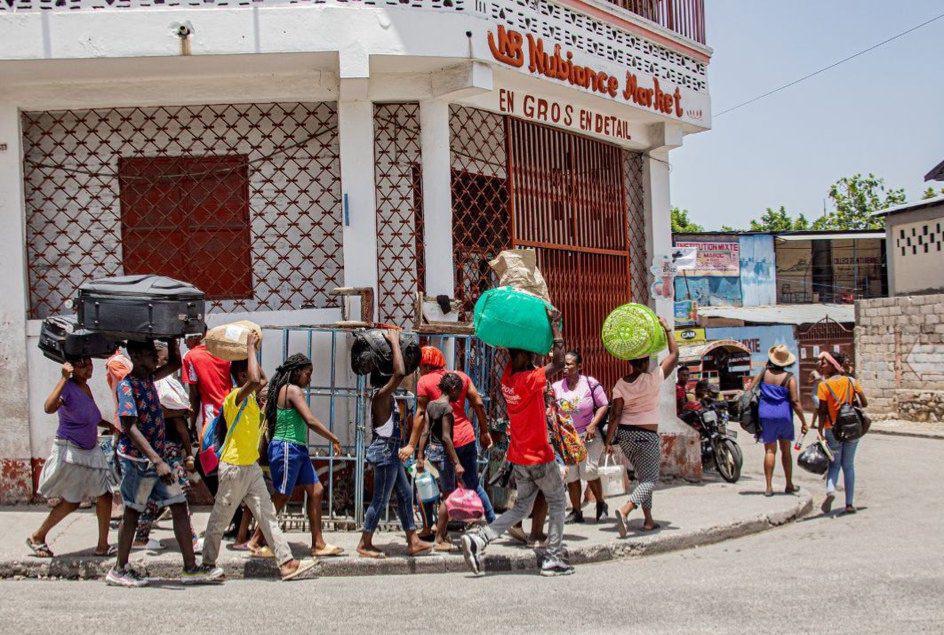
Lenor Baldomère, a cut stone craftsman from Léogâne, recounted the challenging journey that he had to undertake to bring his works to Port-au-Prince. Forced to avoid the usual roads, he had to go to Petit-Goâve, then take a boat to reach the capital. A journey that normally lasts about 30 minutes turned into a three-day journey: leaving on Saturday 13 December, it only arrived on Monday. The total cost of transport is approximately 60,000 gourdes.
According to Baldomère, Léogâne faces an alarming shortage of artistic labour. Without economic opportunities, many experienced artisans turn to other activities to support their families.
The same observation was made on the part of Émilien Blaise, a paper craftsman in Jacmel, who denounced the lack of supervision and institutional support. For him, the lack of accompanying structures is a major obstacle to the sustainability of the craft sector.
In Noailles, a high place of cut iron in Haiti, the situation is equally worrying. Jean Eddy Rémy warns about the risk of the gradual disappearance of the artistic center of Noailles. Contrary to the ideas received, this decline is not due to a lack of production or know-how, but rather to the lack of business opportunities and the continuing insecurity that forces many artisans to abandon their work spaces.
Through these testimonies, Artisanat en Fête 2025 appears not only as an exhibition space, but also as an act of cultural resistance, offering artisans a rare opportunity of visibility, income and recognition in a particularly difficult national context.
W. A.