












©️Embassy of Haiti in France
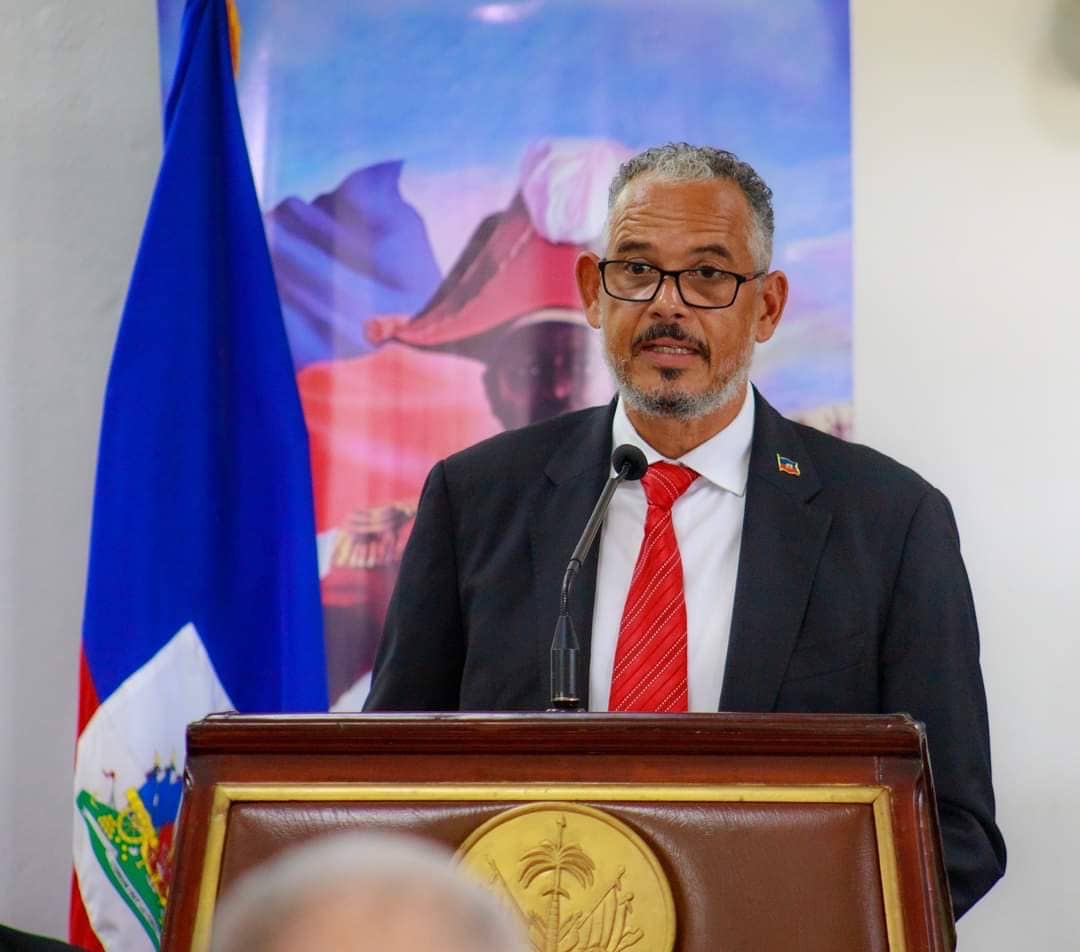
Paris, November 18, 2025.- The Embassy of Haiti in France commemorated on Friday, November 14, the 222nd anniversary of the Battle of Vertières through a conference focused on the duty of memory and the transmission of the Haitian revolutionary heritage. Researchers, authors and members of the diaspora gathered around the theme « Vertières: between duty of memory and responsibility of present generations », in order to place the victory of 18 November 1803 at the heart of the historical and contemporary issues related to the recognition of the Haitian experience of freedom.
In his opening address, Ambassador Louino Volcy recalled the universal dimension of Vertières, a pivotal moment in the world history of human emancipation. He stressed the need to keep alive the memory of the indigenous army leaders and soldiers who, by their victory, ended the Napoleonic colonial project on the island. While the year 2025 marks the bicentenary of the ransom of independence, he stressed the importance of putting Haitian history at the centre of narratives to counter silences, marginalizations and persistent distortions in international narratives.
Jacques Nési, for his part, invited him to go beyond ad hoc commemorations to build a lasting, structured and institutionalized memory. He argued for a firmer integration of the founding dates into the curricula, the creation of accessible places of memory, and the circulation of a calmed historical narrative, free of the fractures inherited from the post-independence era. In his view, Haitians of the country and the diaspora bear a shared responsibility: to transform Vertières into an educational and citizen lever capable of enlightening the current issues of identity, sovereignty and social cohesion.
The intervention of Jean-Claude Bruffaerts brought renewed light to the shadow zones surrounding the act of surrender of 18 November 1803, the original of which remains unobtainable. Based on the existing versions, he showed how some historical narratives tried to reduce the extent of the French defeat. He stressed that the Haitian victory was based on a military strategy developed: control of the terrain around Cap-Haitien, decisive manoeuvres, tactical alliances and coordination power of the Indigenous Army.
By closing the meeting, the Embassy reaffirmed that to transmit Vertières is to preserve a legacy of dignity, resistance and civic responsibility, recalling that this battle is still a major landmark for the global struggle against slavery and all forms of oppression.


R.J.