


















Quetya Aubin and Jacques Wheps Castil
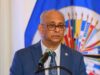
Le lundi 24 novembre 2025, l’Hôtel El Rancho a accueilli la conférence inaugurale de la 12e édition de la Semaine de l’Audit, organisée par l’Institut des Auditeurs Internes d’Haïti (IIA-Haïti). Cet événement annuel incontournable, qui se tient depuis 2012, constitue une plateforme privilégiée d’échanges entre les acteurs de la gouvernance, de la gestion des risques et du contrôle interne en Haïti. Cette édition 2025, placée sous le thème « Développement durable : défis et perspectives pour Haïti et ses institutions « , a réuni environ 300 participants issus des secteurs public, privé, académique et de la société civile. Parmi les conférenciers de cette journée inaugurale, le Dr. Hubermane Ciguino, économiste et directeur du Centre de Recherche en Gestion et en Économie du Développement (CREGED), a présenté une communication sur les « Défis spécifiques pour Haïti : Résilience institutionnelle et adaptation aux crises « .
CREGED: An actor in economics-management research
The Centre de Recherche en Gestion et en Economie du Développement (CREGED) is the only laboratory in economics and management at Quisqueya University (UniQ). Created in March 2001 within the Faculty of Economic and Administrative Sciences (FSEA), the CREGED was evaluated by a commission of international experts in January 2015, then welcomed as a laboratory associated with the Doctoral College of Haiti in March of the same year. The centre serves as an anchor for master's and doctoral programmes in the fields of management and economics.
The central research theme of CREGED is economic growth and development strategies. Since 2015, his scientific project aims to analyse, understand and model the development strategies implemented in Haiti and their socio-economic consequences, while arguing for alternative strategies that can contribute to the country's development. The activities of CREGED are structured around two main areas of research: entrepreneurship and innovation (Axis 1), and development financing (Axis 2). Its areas of expertise include entrepreneurship in various forms, innovation dynamics, socio-economic behaviour, microfinance, banking finance and financial markets.
Dr. Ciguino's participation in Audit Week is part of a tradition of commitment by CREGED to national and international scientific events. This regular presence reflects the Centre's willingness to actively contribute to public debates on development issues in Haiti and to share the results of its research with a wider public of economic, institutional and academic actors.
The 12th edition of Audit Week: A national event
Audit 2025 Week was held from 24 to 28 November in a hybrid format, combining face-to-face activities at Hotel El Rancho and Hotel Montana, as well as online sessions. This twelfth edition has maintained its tradition of excellence despite the difficult context of the country. As Nathanaël Jean-Louis, President of the IIA-Haiti Board of Directors, stressed, the event affirms as « the inescapable crossroads of actors seeking and working for good governance » in Haiti, based on the conviction that it is an essential condition for the country's development.
Le thème retenu pour 2025, « Développement durable : défis et perspectives pour Haïti et ses institutions « , reflète la volonté de l’IIA-Haïti d’ancrer la réflexion sur la gouvernance dans les réalités économiques, sociales et environnementales haïtiennes. Ce choix audacieux reconnaît que le développement durable repose sur l’équilibre entre trois dimensions fondamentales : économique, sociale et environnementale. Dans le contexte haïtien, marqué par une forte vulnérabilité environnementale, des défis économiques persistants et des inégalités sociales importantes, la bonne gouvernance constitue un pilier indispensable pour traduire les principes du développement durable en actions concrètes et pérennes.
L’événement a proposé un programme riche et diversifié. La conférence inaugurale du 24 novembre a présenté un discours d’ouverture sur « Gouvernance, audit et développement durable : un triptyque au service de la transformation institutionnelle « , suivi de trois panels abordant six thématiques majeures. La deuxième journée, dédiée à la Conférence des Leaders d’Audit, a offert un espace privilégié de dialogue sur des sujets stratégiques liés aux domaines 3 et 4 des Normes internationales d’audit interne. La troisième journée, consacrée à l’orientation et à l’initiation aux métiers du contrôle, visait à sensibiliser plus de 300 étudiants et jeunes professionnels, marquant également le lancement du Programme d’adhésion des Étudiants de l’IIA-Haïti. Les 27 et 28 novembre ont complété cette semaine par une série de séminaires en ligne.
This 2025 edition also took place in a context of profound professional change for auditors, with the mandatory implementation since January 2025 of the new International Framework of Professional Practices (CRIPP) of internal audit, as well as the increasing integration of artificial intelligence into audit practices. These developments were the subject of specific training during the event.
The contribution of Dr. Ciguino: Institutional resilience and crisis adaptation
In his inaugural presentation, Dr. Hubermane Ciguino addressed a crucial issue for Haiti's future: how to build resilient institutions capable of absorbing shocks, adapting and transforming in the face of the multiple crises that affect the country. His communication focused on five main areas: analysis of multiple crises and institutional fragility, the concept of crisis and resilience, the specific challenges to institutional resilience in Haiti, adaptation mechanisms and resilience levers, and perspectives and recommendations.
Multiple crises and institutional fragility
Dr. Ciguino began his analysis by pointing out that Haiti has been going through a series of political, economic, environmental and social crises for several decades that put its institutions to the test. Over the past 20 years, the country has experienced an accumulation of multifaceted and interrelated crises. This has led to a deterioration in administrative capacity, a loss of citizen confidence and increased dependence on international aid, increasing structural vulnerability (United Nations Development Programme (UNDP), 2022).
This analysis echoes the observations of the International Monetary Fund (2020) that the governance deficit is one of the first factors explaining Haiti's weak economic and institutional resilience. In particular, Haitian governance suffers from a weak anchor of the culture of accountability, as internal control mechanisms remain underused despite their legal forecast (Superior Court of Accounts and Administrative Litigation, 2021).
The concept of resilience in the Haitian context
Building on the Sendai Framework for Disaster Risk Reduction (United Nations, 2015), Dr. Ciguino defined institutional resilience as the capacity of institutions to absorb shocks, adapt and transform in the face of disruptions. In the Haitian context, this concept goes beyond mere administrative survival to refer to the ability to act effectively in an environment of chronic uncertainty.
Le conférencier a cité Bruneau et ses collaborateurs (2018) pour qui la résilience institutionnelle ne se limite pas à la capacité de résister aux crises, mais implique également la capacité d’en tirer des apprentissages pour se transformer durablement. Il a également fait référence à Cyrulnik (2018), qui définit la résilience comme « la reprise d’un nouveau développement après une agonie traumatique « , une approche particulièrement pertinente pour analyser la réponse des Haïtiens au séisme dévastateur du 12 janvier 2010.
Dr. Ciguino illustrated this resilience with concrete examples from his own research. He referred in particular to the resilience observed in Haiti following the « peyi lòk » (country paralysis periods) and the VOCID-19 pandemic, taking as a typical case Haitian microfinance organizations (Ciguino, 2022). Soumaré and his collaborators (2020) have demonstrated that in several countries, including Haiti, lucrative and regulated microfinance institutions demonstrate a strong resilience to shocks, thanks in particular to their ability to effectively adjust their capital ratio.
This spiral of crises builds resilience among citizens and businesses. Without this adjustment, the Haitian economy would have experienced a total bankruptcy of companies. Despite the difficulties, some more resilient companies continue to offer their services, thus maintaining minimal economic activity in an extremely unfavourable context.
Challenges specific to institutional resilience in Haiti
Dr. Ciguino identified four major challenges that hinder institutional resilience in Haiti:
Governance and accountability weakened : Internal audit, a key transparency tool, is often seen as a sanctioning rather than risk management tool, which significantly limits its strategic impact. This misperception prevents the audit from fully playing its accompanying role in improving organisational processes.
Discontinuity of public policies : Every political change involves challenging ongoing programs, without transfer mechanisms or institutional memory. This organizational instability prevents the consolidation of institutional learning and adaptation to successive crises, thus creating a vicious cycle of perpetual recurrence.
Inter-institutional fragmentation : Public institutions often operate in silos without effective coordination between departments, communities and autonomous agencies. In times of crisis, this fragmentation slows down decision-making and dilutes responsibilities (World Bank, 2023), thus compromising the effectiveness of emergency response.
Digital vulnerability and weak information systems : Most Haitian institutions do not have reliable or interoperable data management systems. The absence of digital archiving and secure platforms limits the continuity of administrative operations in the event of a crisis (Office for the Coordination of Humanitarian Affairs [OCHA], 2021).
Adaptation mechanisms and resilience levers
Faced with these challenges, Dr. Ciguino proposed four main levers to strengthen institutional resilience:
Strengthening internal audit and institutional oversight : Internal auditors are a strategic force for institutional resilience. They can identify systemic risks, assess adaptability and recommend structural adjustments. As the Institute of Internal Auditors (2019) points out, the internal audit must move from a compliance function to a strategic support function.
Integrating risk management into public planning : The establishment of a national framework for integrated institutional risk management would promote a culture of anticipation. Departments and agencies need to include risk analysis in their strategic plans and budgets, allowing for more efficient allocation of resources.
Promoting an organizational culture of resilience : Skills development, continuous training and managerial accountability are essential. The Organisation for Economic Co-operation and Development (2020) recalls that institutional resilience rests primarily on human capital, thus stressing the importance of investing in the human resources of institutions.
Digitalisation and security of administrative systems : The digitisation of processes, automation of critical tasks and the establishment of electronic archiving systems are priorities. These reforms strengthen business continuity capacity and reduce vulnerability to crises.
Perspectives and recommendations
Dr. Ciguino concluded his presentation with a series of strategic recommendations aimed at building sustainable institutional resilience in Haiti:
Establishing a National Framework for Institutional Resiliencebased on the CARICOM model and the Sendai Framework, including mechanisms for monitoring and auditing institutional performance. This framework would help to harmonize institutional strengthening efforts at the national level.
Enhanced coordination between internal audit, inspection and strategic planning, for integrated management of performance and risk. This holistic approach would break down organizational silos and improve the effectiveness of institutions.
Establishment of an Institutional Innovation Fund, to finance pilot adaptation and digitalisation projects in public institutions. This funding mechanism would encourage experimentation and innovation in public administration.
Promoting cooperation between the public sector, universities and civil society in data production and strategic intelligence. Such multi-stakeholder collaboration would enrich the analysis and enhance the legitimacy of public policies.
Leadership and management training in adaptive governance and crisis management, via the National School of Public Administration (ENAF) and continuing certification programmes. This training would develop the skills needed to navigate in complex and uncertain environments.
Dr. Ciguino stressed that institutional resilience in Haiti is not decreed, but is built in time by governance, transparency and collective learning. The internal auditor, as a guarantor of accountability, can play a pivotal role in re-founding a state capable of anticipating, absorbing and transforming crises into reform opportunities. Building resilient institutions requires a common national vision based on trust, competence and continuity.
Research perspectives and scientific partnerships
Dr. Ciguino's presentation opens several promising avenues for future research within CREGED and as part of broader scientific collaborations:
Empirical studies on sectoral resilience : In-depth research could examine the resilience of various Haitian economic sectors to multiple crises. Dr. Ciguino's work on microfinance organisations (Ciguino, 2022) could be extended to other sectors such as agriculture, trade or services to identify common and specific factors of resilience.
Comparative analysis of governance mechanisms : A comparative study of governance and internal control mechanisms between Haiti and other Caribbean countries facing similar challenges would identify best practices adaptable to the Haitian context. This research could be based on the CARICOM model mentioned by Dr. Ciguino.
Analysis of the role of human capital in institutional resilience : Based on the OECD (2020) observation that resilience relies primarily on human capital, research could examine training, retention and skills development policies in Haitian public institutions.
Conclusion
The participation of Dr. Hubermane Ciguino and CREGED in the 12th edition of Audit Week 2025 illustrates the involvement of the research centre in public debates on crucial development issues in Haiti. Its presentation on institutional resilience and crisis adaptation makes a significant contribution to understanding the structural challenges facing the country.
By articulating theoretical conceptualization, empirical analysis and practical recommendations, Dr. Ciguino demonstrated the relevance of academic research to inform public policies and professional practices. His work is fully part of the mission of CREGED to analyse and model development strategies in Haiti while proposing viable alternatives.
The research avenues and partnerships identified in this article demonstrate the potential of CREGED to further contribute to the necessary scientific debates and institutional transformations in Haiti. In a context where sustainable development and institutional resilience are imperatives for the country's future, the role of research centres such as CREGED is more crucial than ever.
Audit Week 2025 confirmed that building resilient institutions in Haiti requires a convergence of efforts between listeners, researchers, policymakers, entrepreneurs and citizens. It is in this collaborative and multidisciplinary perspective that CREGED will continue to contribute to the advancement of knowledge and the positive transformation of Haitian realities.
References
World Bank. (2023). Haiti: Governance, fragility and institutional resilience. Washington, D.C.
Bruneau, M., Chang, S. E., Eguchi, R. T., Lee, G. C., O-Rourke, T. D., Reinhorn, A. M., Shinozuka, M., Tierney, K., Wallace, W. A., & von Winterfeldt, D. (2018). Resilience and sustainability of institutions. Cambridge University Press.
Ciguino, H. (2022). Resilience of Haitian microfinance organizations to crises [Communication presented]. Scientific Conference, Haiti.
Superior Court of Accounts and Administrative Litigation. (2021). Report on the performance of Haitian public institutions. Port-au-Prince, Haiti.
Cyrulnik, B. (2018). Resilience: A recovery process after trauma. Odile Jacob.
International Monetary Fund. (2020). Haiti: Diagnosis of governance and institutional strengthening. Washington, D.C.
Institute of Internal Auditors. (2019). International standards for the professional practice of internal auditing. The IIA.
Organization for Economic Cooperation and Development. (2020). Strengthen governance and institutional resilience in fragile states. Paris, France.
United Nations. (2015). Sendai Framework for Disaster Risk Reduction 2015-2030. Geneva, Switzerland.
United Nations Development Programme. (2022). Human Development Report on Haiti: Institutions and Vulnerabilities. New York, NY.
Office for the Coordination of Humanitarian Affairs. (2021). Haiti: Assessment of institutional capacity to respond to humanitarian crises. United Nations.
Soumaré, I., Tchana, F.T., & Kengne, T.M. (2020). Analysis of the determinants of financial performance of microfinance institutions. International Journal of Finance & Economics, 27(1), 1-18.
Jacques Wheps CASTIL
Haiti-Antilles Pole, Haiti Science and Society (Ha-Sci-So)
Team of Scientific Partners for Research Communication (E-PSi-CoRe)
Quetya AUBIN
Haiti-Antilles Pole, Haiti Science and Society (Ha-Sci-So)
Team of Scientific Partners for Research Communication (E-PSi-CoRe)