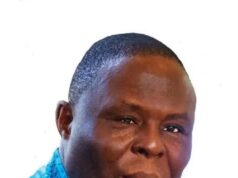

















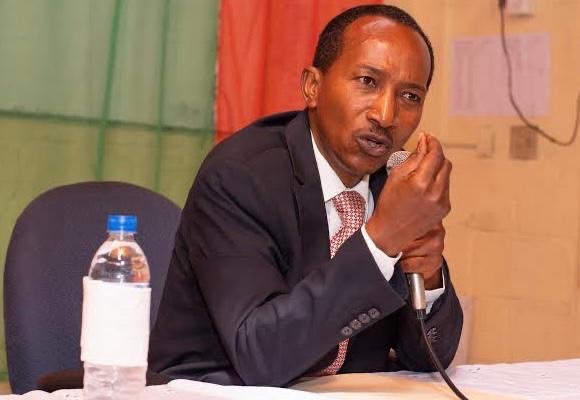
Political analyst, Lemoine Bonneau
Pétion-Ville, March 15, 2026.- The proliferation of political parties in Haiti would be linked to several political decisions and legislative provisions adopted since the early 2000s. The political analyst Lemoine Bonneau believes that certain measures, including promises of public funding and laws facilitating the creation of parties, have contributed to the emergence of a large number of political parties and the gradual fragmentation of the national political landscape.
According to the analyst, one of the factors contributing to this proliferation dates back to 2005, under the interim presidency of Boniface Alexandre. At that time, a pledge of subsidy of about 500,000 gourdes had been announced in favour of political parties. According to Lemoine Bonneau, this initiative has encouraged several groups to create their own structure so that they can benefit from possible public funding.
At the same time, the political context was also marked by the willingness of some actors to have an electoral platform to participate in the elections. According to the explanations reported, the businessman and presidential candidate Dumarsais Mécène Simeus then sought a political structure to present his candidacy. In this context, Dr. Gérard Blot would have ceded the Tèt Ansanm party, allowing Dumarsais Simeus to have a political banner to start the presidential race. For some observers, this episode illustrates the fact that parties have sometimes served as instruments for political negotiation rather than as real ideologically based organizations.
Lemoine Bonneau also points out that the law on political parties adopted in 2014 has, according to him, facilitated the creation of new formations. This legislation allows for the establishment of a party with a relatively small number of members, which has prompted several political actors to set up their own structure, particularly because of the provisions on public funding.
According to his observations, some parliamentarians elected under the banner of existing parties subsequently created their own political formation, thus becoming beneficiaries of the mechanisms provided for by the law. This situation has helped, he believes, to accentuate the fragmentation of the Haitian partisan system.
Faced with this reality, Lemoine Bonneau pleads for a thorough reform of the legislation governing political parties. In particular, it proposes to distinguish regionally oriented parties from nationally oriented parties and to require a minimum threshold of representativeness, e.g. 5% of the electorate, to maintain the legal recognition of a party.
Such a reform could, in his view, be adopted by a new law passed by Parliament or as part of institutional measures aimed at rationalizing the functioning of the Haitian political system.
R.J.