









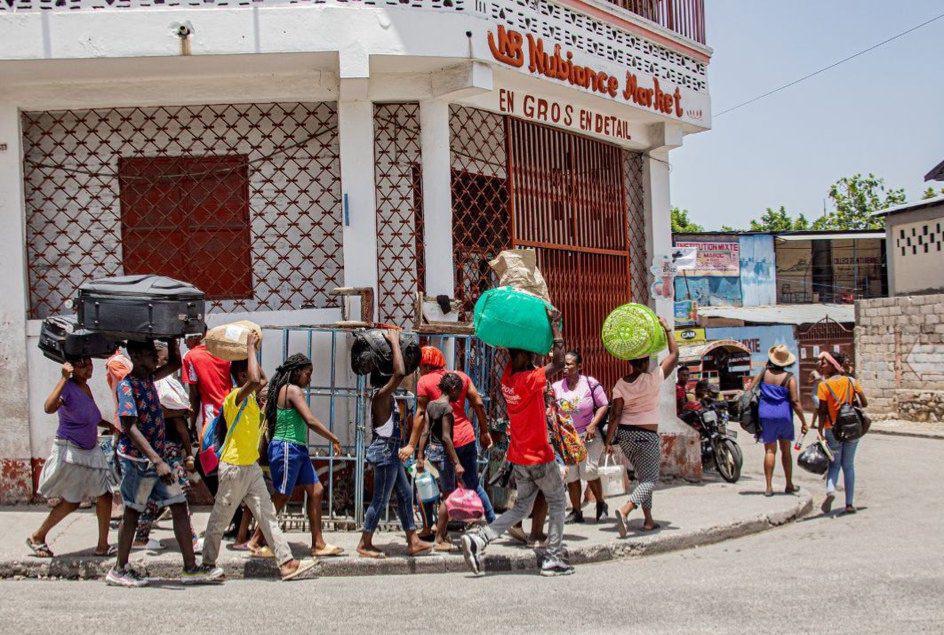





New York, October 1, 2025.- The UN Security Council adopted resolution 2793 transforming the Multinational Security Support Mission (MSS) into a gang suppression force. The new mission, which is planned for one year, will have up to 5,500 troops, police and military. But issues of financing, logistics and political timetable in Haiti are already threatening its implementation.
In an interview with Radio Magik 9 on Wednesday, 1 October, analyst Diego Da Rin welcomed the adoption of resolution 2793, while highlighting the many challenges surrounding the creation of the new force. According to him, nine countries have already expressed their willingness to contribute by sending staff, but their commitment still depends on the availability of logistical and financial resources.
Unlike MSS, whose mandate expires on 2 October 2025, the new force is not a United Nations peacekeeping mission. However, it will have a more robust mandate and a potential strength of 5,500 uniformed personnel, including police and military. The stated objective: to try to stem gang violence in the country.
However, funding remains the main obstacle. The United States, although driving the initiative, refuses to assume the majority of costs. Washington is trying to mobilize Canada, Caribbean and Latin American countries to meet financial needs. Without guaranteed resources, deployment remains uncertain.
To this is added the Haitian political calendar: the mission is to be completed in February 2026, a date scheduled for the end of the political transition. However, no serious agreement has yet been reached between Haitian political forces to hold credible elections. For Diego Da Rin, this element undermines the sustainability of the mission and the institutional future of the country.
W.A.