












©️UNIQ
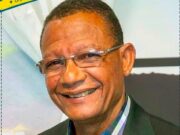
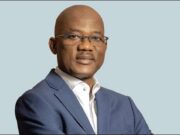
Elected to the Board of Directors of the Agence universitaire de la Francophonie (AUF) for the Caribbean region, Professor Evens Emmanuel, vice-rector of research and innovation at the Université Quisqueya, intends to make his mandate a lever to increase French-language scientific publication, strengthen the scientific visibility of the Caribbean and promote a more inclusive university Francophonie. True to the vision of French-speaking scientific diplomacy at AUF, he wants to unite Caribbean researchers around the same objective: to publish together, to innovate sustainably and to build the region's resilience.
Le professeur Emmanuel confie avoir accueilli son élection avec « beaucoup d’émotion » et « un profond sentiment de responsabilité « . Représenter la Caraïbe francophone au sein de l’AUF, avec le vote des universités membres d’Haïti, de Cuba, de la République dominicaine, de la Jamaïque et des Antilles françaises, constitue selon lui une reconnaissance du travail accompli par les institutions haïtiennes. Sa candidature, soutenue par le recteur de l’Université Quisqueya, le professeur Jacky Lumarque, s’inscrit dans la continuité de plus de vingt ans de collaboration avec l’AUF, et d’engagement au service de la recherche, de la coopération universitaire et de l’innovation scientifique.
Building on his academic background – a Doctor of Environmental Sciences, who holds the right to direct research in science, a former member of the AUF Scientific Council, president of the Réseau des Universités Francophones Responsables et Inclusives (RUFRI) – he is committed to making the Caribbean a space of excellence and scientific solidarity.
Bringing French-speaking Caribbean science to life
Dans la lignée du Manifeste pour une diplomatie scientifique francophone adopté au Caire en 2022, le professeur Emmanuel ambitionne de renforcer la visibilité et l’impact de la recherche en français. Il plaide pour la création d’un Fonds AUF-Caraïbe destiné à subventionner les publications scientifiques et à accompagner les chercheurs de la région dans le référencement de leurs travaux. Il propose également la mise en place d’une « Maison d’édition scientifique francophone « , qui publierait des revues et ouvrages collectifs sur des thématiques telles que les vulnérabilités environnementales, les Objectifs de Développement Durable (ODD) ou encore l’intelligence artificielle. Ces initiatives, soutenues par l’AUF et l’Académie internationale de la Francophonie scientifique (AIFS), visent à doubler la visibilité des revues francophones caribéennes d’ici 2029.
A structuring vision for Haitian research
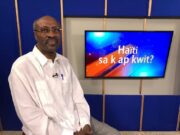
Le professeur Emmanuel estime que la recherche en Haïti souffre d’un manque de coordination institutionnelle et d’une faible politique scientifique nationale. Pour combler ces lacunes, il appelle à la création de portails HAL pour les universités haïtiennes, permettant d’héberger et de diffuser les travaux de fin d’étudesdes étudiants (licence et master) et des chercheurs (doctorants, docteurs, maîtres de conférence et professeurs des universités). Il souhaite aussi développer une veille scientifique régionale pour informer et motiver les chercheurs à participer aux appels à projets internationaux. « La science n’est pas seulement l’affaire des chercheurs, c’est avant tout une vision d’État « , affirme-t-il, plaidant pour un engagement clair de l’état haïtien, er plus particulièrement du gouvernement, dans le financement de la recherche et l’innovation.
Train, popularize, connect science to society
Aware that science cannot progress without communication, Professor Emmanuel wants to promote scientific outreach and the training of specialized journalists. He plans to collaborate with the THEOPHRATES Network, which brings together the educational institutions in communication and journalism members of the AUF to animate seminars on scientific journalism in collaboration with Haitian universities for the benefit of media workers in Haiti. For him, bringing science closer to society is an essential condition for the sustainable establishment/strengthening of the scientific culture, education for citizenship, and the sustainable resilience of Caribbean societies.
W.A.