













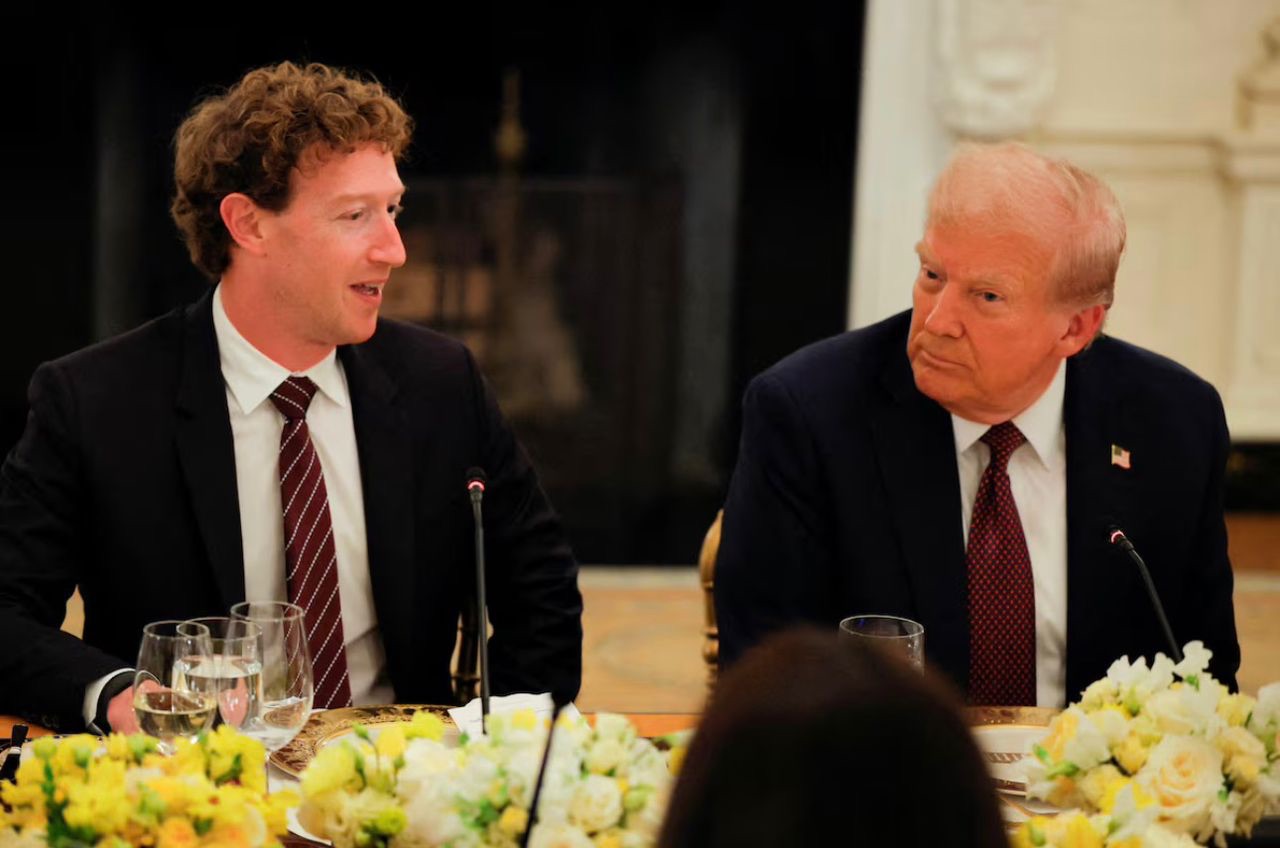

US President Donald Trump•©️AFP
Washington, 8 January 2026.- By a decree signed Wednesday, January 7, 2026, US President Donald Trump ordered the withdrawal of 66 international organizations from the United States, nearly half of which were linked to the United Nations system. These institutions include pillars of global climate and scientific cooperation, confirming Washington's radical shift against multilateralism and environmental diplomacy.
At the heart of this vast disengagement is the United Nations Framework Convention on Climate Change (UNFCCC), a founding treaty adopted at the 1992 Rio Earth Summit. This convention is the legal architecture of all international climate agreements, including the 2015 Paris Agreement, which Donald Trump had already left for the second time upon his return to the White House.
Unlike its first mandate, where the United States had remained a member of the UNFCCC despite its withdrawal from the Paris Agreement, Washington is now fully withdrawing from the multilateral framework of climate negotiations.
The Presidential Decree also provides for the release of the United States of America from the Intergovernmental Panel on Climate Change (Giec), a global reference in climate science. Other bodies dedicated to environmental protection are also concerned, including the International Renewable Energy Agency, the International Union for Nature Conservation and UN-Water.
This decision follows an ideological line assumed by Donald Trump, who recently described global warming as « greater scam in our history », while praising the merits of coal in his speech at the UN General Assembly.
Beyond the climate, the decree also orders the withdrawal of the United States from the United Nations Population Fund (UNFPA), specializing in maternal and child health, after the prior cessation of its funding. The United Nations Trade and Development Agency (UNCTAD) is also one of the institutions concerned.
These announcements are in addition to the withdrawals already made by the World Health Organization (WHO) and Unesco, which the United States had returned to under the presidency of Joe Biden.
The decision elicits strong reactions from the scientific and diplomatic community. For several observers, these withdrawals reflect the desire of the United States to permanently disengage from international cooperation mechanisms, at the risk of weakening global responses to climate, health and social crises.
W.A. with AFP