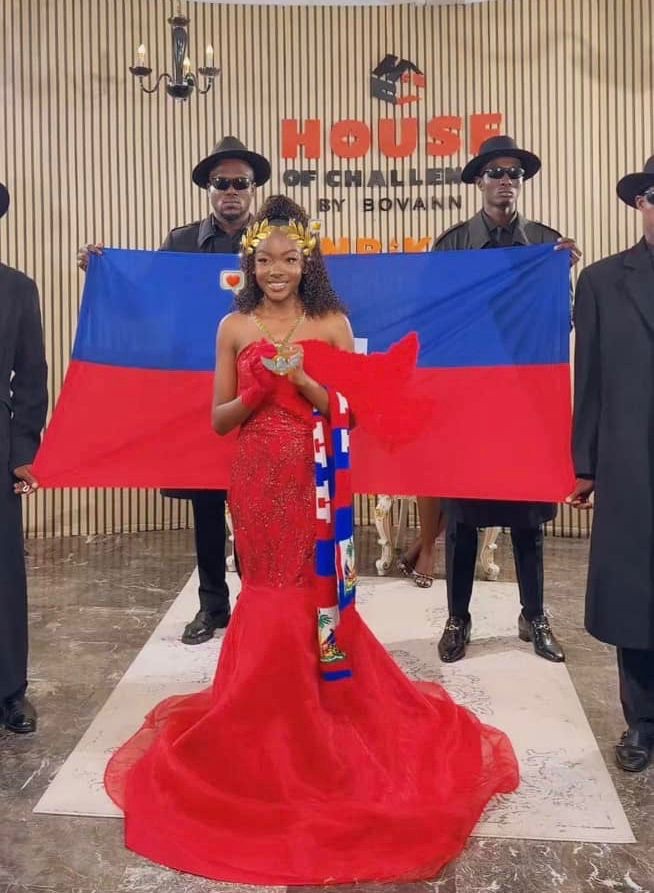















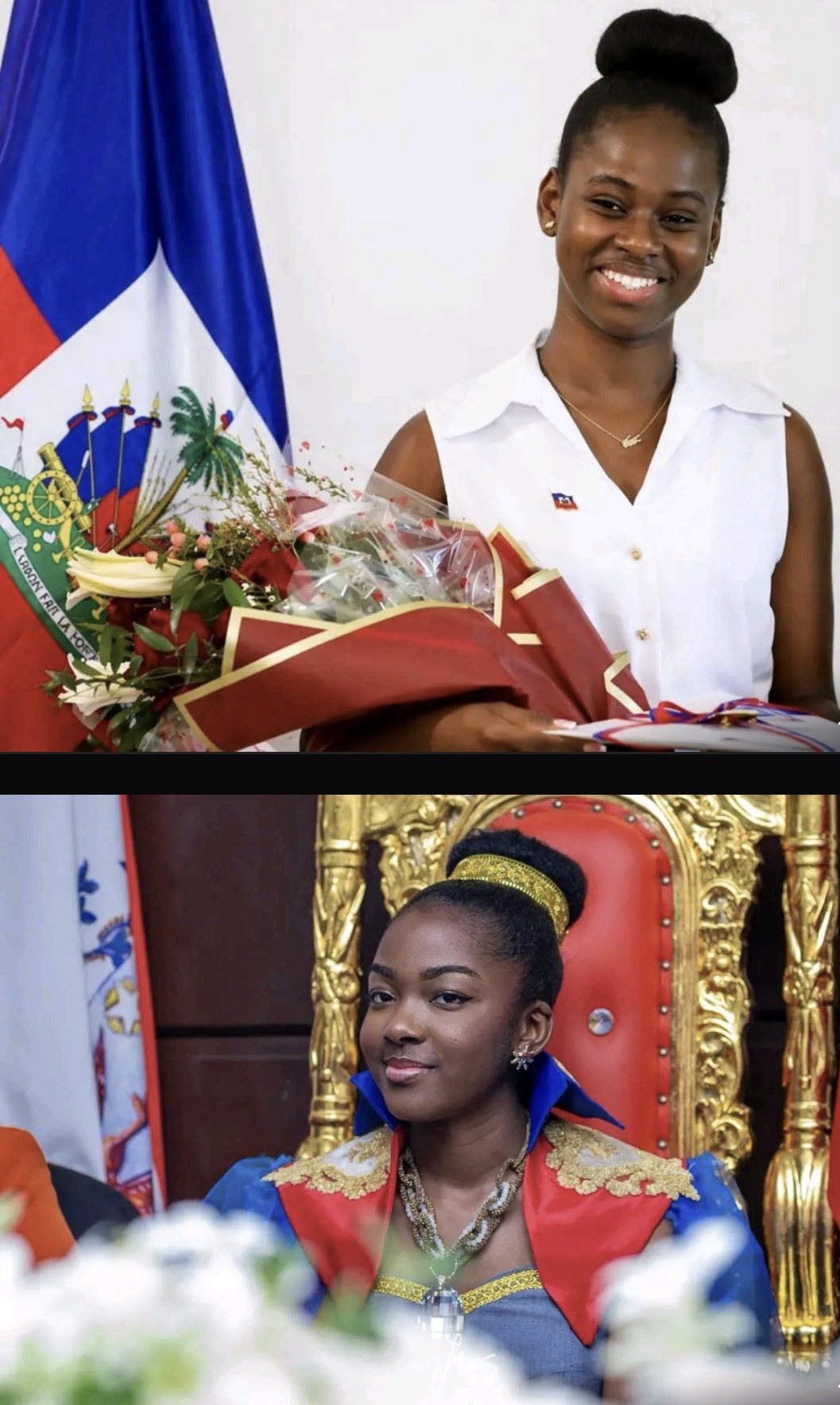
Port-au-Prince, April 24, 2026.- In Jacmel, a cultural city in south-east Haiti, two young women embody a rare dynamic: that of a youth that crosses borders to exist on international scenes. Ariana Milagro Lafond was featured in the African House of Challenge competition, while Abigaïl Alexandre won the largest French-language oratory art competition in France. «Eloquetia». Two distinct paths, but one origin and one ambition: to succeed far from home.
Jacmel, between cultural memory and silent departures
In the morning, Jacmel keeps his particular rhythm: lively streets, art workshops, conversations that mix French, Creole and local imagination. But behind this recognised cultural life, another reality arises: that of a young person who often dreams elsewhere.
It is in this context that Ariana Milagro Lafond and Abigail Alexander grow up. Two paths that were not born of immediate visibility, but of progressive work, often discreet, away from the projectors.
Ariana Milagro Lafond: International Event
When Ariana Milagro Lafond joined the House of Challenge competition, she entered a world of constant performance and constant pressure. On the African plateaus of the competition, the events run smoothly. You have to adapt, perform, resist. For a young Haitian woman, the experience is as much cultural as competitive: new codes, new looks, new expectations.
In a viral video, Ariana lets a message burst that has gone beyond entertainment to touch a social and emotional rope:
« One day there will be freedom in Haiti...
One day there will be peace in Haiti...
One day we will live quietly in Haiti...
one day Haiti will change...
One day everything will change for Haiti...
We've already proven everything...
We are rich in heart, we are rich, we are rich!!! »
In the tone, in the intensity, in the repetition, many saw there a cry of hope, but also a form of reminder: that of a country where youth feel capable, but not always accompanied.
Abigail Alexander: speech as construction
In France, in the amphitheatres and scenes of Éloquetia, Abigaïl Alexandre is part of another form of trial: language.
Here, it is not physical performance, but structure of thought, control of rhythm, ability to convince. The eloquence becomes a total exercise: intellectual, emotional and technical.
In front of the public, Abigail learns how to turn speech into a tool. Each sentence must have an idea. Every silence becomes strategic. In this universe, victory rewards not only the voice, but the rigor of mental construction.
Two paths, two forms of discipline
Ariana and Abigail do not only share a geographical origin. They share a logic: that of the requirement.
One in the world of international scenic competition, the other in the world of academic eloquence. Two different worlds, but the same foundation: invisible work, repetition, personal discipline.
Jacmel, discreet but constant thread
On both routes, Jacmel appears less like a decor than a silent starting point. A city that produces not only artists or intellectuals, but trajectories that export.
This reality questions: why do some talents find their full recognition outside of Haiti before getting it in their own country?
Une jeunesse entre potentiel et éloignement
Les histoires d’Ariana Milagro Lafond et d’Abigaïl Alexandre mettent en lumière une jeunesse haïtienne capable de s’adapter à des environnements internationaux exigeants. Mais elles révèlent aussi une tension structurelle : celle d’un pays où le potentiel existe, mais où les cadres d’expression et d’accompagnement restent limités.
Deux voix, une même trajectoire d’élévation
Ariana Milagro Lafond et Abigaïl Alexandre ne racontent pas seulement deux succès individuels. Elles dessinent une trajectoire générationnelle : celle d’une jeunesse jacmélienne qui s’élève en dehors de ses frontières, portée par le travail, la discipline et la volonté de se faire entendre. Entre la scène africaine et les tribunes françaises, leurs parcours racontent une même réalité : celle d’une jeunesse qui avance, même lorsque le chemin commence loin des projecteurs.
R.J.