








A round table organized by Campus France and its partners to assess progress and consider the future of higher education in Haiti
By Quetya Aubin
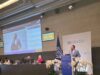
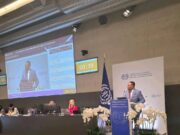
On the occasion of the 80th anniversary of the French Institute in Haiti (IFH), December 7, 2025, Campus France, structure responsible for academic mobility within the Embassy of France and the IFH, organized a round table dedicated to higher education on December 4, 2025, at Lycée Alexandre Dumas under the theme: « University cooperation and mobility: where is Haiti and where are we going? » It brought together academic leaders, international partners, financial actors and civil society representatives and provided a framework for collective reflection on international academic cooperation. This report proposes a descriptive and prospective analysis of exchanges, highlighting academic mobility as a strategic investment, tensions between brain drain and return of skills, and the emergence of a paradigm based on fair scientific partnership.
Haitian higher education is central to development, sovereignty and institutional reconstruction issues. Yet it remains marginal in public policies. The words of introduction to the round table were spoken by the Director of Higher Education and Research of the Ministry of National Education and Vocational Training (MENFP), Mr. Judson Jean Joseph and Doctor Guerlande Bien-Aimé of Quisqueya University was the moderator. This round table brought together the Director of Cabinet of the Rector of the State University of Haiti, Mr. Bildadson Cadélus, the Vice-Rector of Research and Innovation of the University Quisqueya, Mr. Evens Emmanuel, the President of the FOKAL, Ms. Michèle D. Pierre-Louis, the Governor of the Bank of the Republic of Haiti, Mr. Ronald Gabriel and the Director of Expertise France in Haiti, Mr. David Bruchon.
The diversity of stakeholders (public and private universities, international cooperation, the financial sector, civil society and scholarship recipients) has allowed higher education to be seen as a strategic lever for the convergence of governance, economic development and social transformation. Academic mobility is not considered as an individual journey, but as a long-term collective investment. This collective perspective, enriched by the testimonies of the participants, highlights how mobility can transform structural challenges into opportunities for institutional strengthening, fostering increased resilience to the persistent political and security crises in Haiti.
French Institute
The French Institute is the pivotal operator of the Ministry of Europe and Foreign Affairs and the Ministry of Culture in the implementation of France's foreign cultural policy. Its tasks are the support and facilitation of the French cultural cooperation and action network abroad (i) the support of French creators and creators and cultural and creative industries in their international development (ii) the strengthening of dialogue between cultures and societies (iii) and the promotion of the French language and plurilingualism (https://www.institutfrancais.com/en/qui-sommes-nous). This entity plays an essential role in disseminating French cultural values while promoting mutually enriching exchanges with partner countries, as in Haiti where it adapts to local contexts to promote education and creativity.
The French Institute of Haiti (IFH), founded in 1945 under the direction of Pierre Mabille and inaugurated on December 7 in the presence of President Elie Lescot and major Haitian intellectual figures of the time, wants to embody a history of resilience to the image of Haiti itself. As French Ambassador Antoine Michon stressed in his commemorative speech, this anniversary goes beyond the cultural dimension to reveal the essence of the Franco-Haitian link, based on a shared history and a common will to build a future based on dialogue, knowledge and freedom. Historically committed to higher education, the IFH transcends cultural diplomacy by enrolling in the training of teachers and university executives, thus contributing to national educational sovereignty.
Over the course of eight decades, the IFH has forged lasting links between Haiti, the Francophonie and the international academic world, with flagship initiatives such as the Tanbou project, funded by the Agence Française de Développement (AFD) and implemented in partnership with FOKAL, which professionalizes Haitian cultural actors through international residences, scholarships and networks. The IFH also maintains a dynamic cultural offer – shows, cinema, exhibitions, debates and workshops – often in collaboration with the network of Alliances Françaises, nourishing intercultural dialogue and offering essential spaces of expression for Haitian youth. Its results bear witness to a dual vocation: to promote Francophone culture while strengthening the academic skills of Haitians by opening up opportunities for training and exchange at the international level, even in a context marked by successive crises.
Campus France
Campus France is a public institution responsible for promoting French higher education abroad and welcoming foreign students and researchers in France. It promotes international mobility, manages scholarship programmes and runs the alumni network. Its main mission is to promote French higher education. It is a public institution under the dual supervision of the Ministry of Europe and Foreign Affairs and the Ministry of Higher Education and Research. Its work is carried out in consultation with the higher education institutions and their representative conferences: France Universities, the conference of the great schools (CGE) and the conference of the directors of the French engineering schools (CDEFI).
Campus France provides foreign students and researchers with tools to make them more familiar with French higher education institutions and to find the right one for their project. It also supports French higher education institutions and research organisations in their international development strategy. This comprehensive approach not only promotes France's attractiveness as an academic destination, but also the creation of sustainable partnerships that contribute to the mutual development of the countries involved.
In Haiti, Campus France operates within the French Institute, playing a decisive role in academic mobility via its dedicated space by accompanying Haitian students or residents in Haiti wishing to continue their studies in France. This support includes guidance, admission assistance, information on programs and monitoring of former students, thus strengthening the human capital of young Haitians and creating bridges with French or European universities. In the context of the 80th anniversary of the IFH, Campus France in Haiti illustrates France's concrete commitment to international mobility, with programs such as Antenor Firmin for doctoral mobility or ELAN-Interreg for regional exchanges, helping more than 4000 Haitian students annually to embrace their future with conviction while laying the foundations for a return of these skills to the country.
State of Haitian higher education and structural challenges
Mr. Jean Judson Joseph, drew up a precise overview of the sub-sector of higher education, focusing on a State University of Haiti structured around 23 distinct entities, developing regional public universities and a digitally dominant private offer. The majority of training courses are at the level of the bachelor's degree, while those giving rise to master's and doctoral degrees are few. This structural weakness limits national research capacity and increases external dependence on advanced training. The reference to the State Scholarships Act 1955 illustrates the continuing tension between an old normative framework and contemporary social realities. Despite these constraints, the UEH has shown a significant resilience. Experiences of outsourced masters, notably in partnership with the Paris 8 University, have enabled teachers to be trained locally and to maintain academic continuity despite the crises. However, the exodus of teachers and the deterioration of academic living and working conditions remain major obstacles, requiring urgent reform to align public policies with development challenges.
Historical cooperation, educational sovereignty and institutional frameworks
The last 15 years have seen a strengthening of international academic cooperation arrangements, notably through mobility and research programmes. However, political instability, security crises and weak academic infrastructure have impacted these schemes. On the scientific side, Franco-Haitian cooperation remains rich, varied and managed to adapt remarkably, despite the complexity of the context. To date, it remains at the same time, one of the solid pillars of the relationship between France and Haiti, which generates high-level Haitian and French expertise.
This cooperation is illustrated daily through numerous tools including: « AntenorFirmin » in partnership with the Embassy of France in Haiti, the Agence universitaire de la Francophonie (AUF), the Bank of the Republic of Haiti, coupled with the Institut de Recherche pour le développement (IRD). In addition, mention should also be made of the master's mobility programme, (in partnership with the Embassy of France in Haiti, the Bank of the Republic of Haiti (BRH) and the Sogebank Foundation), direct funding for the consolidation of master's degrees, in particular at the Faculty of Sciences and the École Normale Supérieure (ENS) of the University of State of Haiti (UEH), support for a dozen interuniversity agreements active in several fields (geoscience, agro-ecology, environment, health, social sciences, linguistics, etc.), some of which are strengthened by the Erasmus+ programme, the granting of grants in support of laboratories and doctoral schools of the UEH, the Quisqueya University (UniQ) and the École Supérieure d'Infotronique d'Haïti (ESIH).
In addition, discussions at this round table also revealed the lack of strategic governance in higher education, which operates without clear institutional coordination or long-term vision. Under such conditions, cooperation and mobility could produce fragmented effects and reinforce existing vulnerabilities, rather than correct them. These tools, enriched by International Mixed Laboratories (LMI) such as CARIBACT for geosciences or ELDORADO for climate change-related diseases, demonstrate how cooperation can adapt to crises to generate mutual expertise and support Haitian institutional autonomy.
For a policy of cooperation of the Haitian University
Today, it is preferable to talk about partnership rather than cooperation, because partnership involves horizontal collaboration between autonomous actors, respecting equity and the rights of everyone, as defined in the development literature. For the Haitian university, this means developing fair North-South scientific partnerships, focused on the joint production of knowledge for sustainable development and Sustainable Development Goals (SDGs), including SDG 17 on global partnerships. Faced with inequalities – such as limited access to databases, funding, high-impact publications or working conditions – the Haitian university needs to ask key questions: how to put science in the South in a fair dynamic with the North? What impact do these asymmetries have on scientific culture in the South? What horizontal approaches can the North adopt for collective SDG research? And which areas, which are invisible by northern science, such as local knowledge in agroecology or environmental resilience, deserve to be valued in the South?
In Haiti, this translates into initiatives such as the International Mixed Laboratories (LMI) of IRD, such as CARIBACT for geosciences and climate change. The goal is to build local capacity, as at the State University of Haiti (UEH) and Quisqueya University (UniQ), for a mutually beneficial partnership, fostering innovation and collective well-being. This conceptual inflection, as Mr Emmanuel argued at the round table, calls for moving beyond asymmetrical logics to co-build research agendas aligned with national priorities, thereby strengthening local scientific production and limiting external dependence.
The functioning of mobility (entry and exit) in the Haitian university space: scope and responsibilities
Dans son intervention, Monsieur Bildadson Cadélus a présenté le dispositif de mobilité existant à l’UEH, soulignant son importance croissante dans un contexte où de nombreux enseignants s’établissent à l’étranger en raison des crises. Il a insisté sur la nécessité de sortir d’une logique de « coopération isolée » pour adopter une coopération structurée, intégrant la mobilité physique (échanges directs), la mobilité virtuelle (via des plateformes numériques pour des formations à distance) et, à terme, une mobilité hybride adaptée aux réalités nationales comme l’instabilité sécuritaire. Ces dispositifs fonctionnent car ils permettent de maintenir une continuité académique malgré les obstacles, comme les masters délocalisés en partenariat avec l’université Paris 8, qui forment localement des enseignants et renforcent la résilience de l’UEH. Cependant, l’exode des enseignants et la précarisation des conditions de travail restent des défis majeurs, nécessitant une meilleure coordination pour maximiser l’impact sur la reconstruction institutionnelle et la souveraineté éducative.
Plus de 4000 étudiants poursuivent chaque année leurs études dans les universités françaises. Cette mobilité est présentée comme un investissement majeur, assumé comme un pari sur l’avenir du pays. Elle soulève cependant une question centrale : celle du retour des compétences et de leur contribution durable au système académique national.
La table ronde a insisté sur la nécessité de structurer cette mobilité à travers le développement de filières complètes en Haïti, la promotion de thèses en co-direction et la mise en place de dispositifs favorisant l’engagement des diplômés. Les conditions de retour, (accès au logement, au crédit, à des environnements professionnels stables et à des mécanismes de mentorat), ont été identifiées comme déterminantes. Le témoignage d’un des boursiers a incarné la dimension humaine de la mobilité académique. Celle-ci est présentée non comme une fuite, mais comme un acte de résistance intellectuelle et un engagement envers la reconstruction du pays, malgré un contexte structurel contraignant. La mobilité est ainsi repositionnée comme un outil de transformation collective et un projet de société, avec un appel à des alliances multisectorielles pour en maximiser les bénéfices.
Femmes et cycles supérieurs : relever le défi de la parité
En tant qu’intervenante, Madame Michèle Duvivier Pierre-Louis a rappelé l’histoire de l’IFH et souligné son rôle pivotal dans le paysage intellectuel haïtien, tout en évoquant les nombreuses collaborations entre l’IFH et la FOKAL pour promouvoir l’accès au savoir. Elle a insisté sur la nécessité de renforcer l’accompagnement des élèves dès le secondaire pour mieux préparer les futurs universitaires et améliorer la qualité globale de l’enseignement supérieur. Concernant l’équité de genre, elle propose des bourses spécifiques pour les étudiantes, des programmes de coaching, des réseaux de soutien pour valoriser les parcours féminins en recherche, et des politiques inclusives dans les institutions pour promouvoir l’égalité et des environnements sécurisés. La FOKAL, à travers ses séminaires, conférences et centres de ressources, appuie déjà la recherche en sciences humaines et sociales, encourageant la publication et la démocratisation de l’enseignement supérieur pour former une élite intellectuelle engagée, avec un focus sur l’inclusion des femmes pour un impact durable sur le développement haïtien.
Lors de cette table ronde, les panélistes ont soulevé une question majeure : la sous-représentation des femmes dans les programmes de deuxième et troisième cycle de l’enseignement supérieur haïtien. Ce constat met en lumière une réalité persistante dans le système universitaire du pays, où les femmes, malgré leur présence significative dans les filières de premier cycle, rencontrent de nombreuses barrières pour accéder aux cycles avancés de formation et à la recherche scientifique. Les acteurs présents ont identifié plusieurs facteurs à l’origine de cette situation. Parmi eux, les contraintes sociales et familiales, les stéréotypes de genre, le manque de mentorat, et l’insuffisance de dispositifs d’accompagnement académique et financier adaptés aux besoins des étudiantes. À cela s’ajoute un déficit de sensibilisation dans les institutions sur l’égalité des chances et la promotion de la diversité dans les filières scientifiques et techniques. Face à ce constat, les participants ont proposé plusieurs pistes de solutions concrètes.
Il a été recommandé de créer des réseaux de soutien et de visibilité pour valoriser les parcours féminins dans la recherche et l’enseignement. Par ailleurs, les institutions universitaires sont encouragées à adopter des politiques inclusives, à sensibiliser le corps enseignant sur les enjeux de genre. Ces initiatives doivent être soutenues par les partenaires internationaux et les acteurs de la société civile pour garantir leur impact durable, transformant ainsi la parité en levier de développement inclusif.
Accompagner et valoriser le retour en Haïti des personnes en mobilité
Monsieur David Bruchon a insisté sur la nécessité d’assurer des ressources suffisantes pour renforcer la structuration, la gouvernance et l’offre de formation dans l’enseignement supérieur haïtien, en identifiant des bailleurs pour soutenir les priorités du secteur. Pour valoriser le retour des boursiers, il préconise des dispositifs structurants comme des conditions favorables au retour – accès au logement, crédit, environnements professionnels stables et mentorat. Campus France en Haïti, en favorisant l’introduction de standards internationaux comme le système LMD (Licence-Master-Doctorat), des diplômes conjoints et la formation continue des enseignants, agit comme accélérateur de capacités, aligné sur les priorités nationales en éducation, santé, numérique et industries culturelles. Cela limite la migration contrainte et renforce l’intégration internationale, transformant la mobilité en outil de transformation collective pour contrer l’« effritement des cerveaux » et maximiser l’impact des investissements.
Rôle des institutions non universitaires (ex. BRH) dans les partenariats et la mobilité
Le Gouverneur de la Banque de la République d’Haïti, Monsieur Ronald Gabriel, a présenté les efforts de la BRH à travers les bourses accordées à des étudiants dans des domaines ciblés, partageant les enseignements tirés depuis le lancement du programme. Le Fonds BRH joue un rôle clé en finançant des projets pour moderniser les infrastructures universitaires, acquérir du matériel et créer des laboratoires, améliorant les conditions d’apprentissage. Il appuie aussi des programmes de bourses, recherche appliquée et partenariats internationaux, favorisant la mobilité et la valorisation de la production scientifique haïtienne. En ciblant des secteurs stratégiques comme les sciences, l’ingénierie, l’économie et la gestion publique, le Fonds contribue à former une élite compétente et à renforcer l’insertion professionnelle, inscrivant l’enseignement supérieur dans une logique macroéconomique où les bourses sont un investissement dans le capital humain et la stabilité institutionnelle.
Selon Monsieur Gabriel, Le Fonds de Recherche pour le Développement de la Banque de la République d’Haïti (FRD-BRH) joue un rôle clé dans le renforcement de la recherche en Haïti, en soutenant l’accès au savoir, la qualité académique et le développement des compétences nationales. Il finance des projets permettant aux universités de moderniser leurs infrastructures, d’acquérir du matériel pédagogique et scientifique, et de créer des laboratoires de recherche, améliorant ainsi directement les conditions d’apprentissage et la formation des étudiants. Le Fonds BRH appuie également des projets de recherche appliquée et des partenariats internationaux, favorisant la mobilité académique, l’échange de connaissances et la valorisation de la production scientifique haïtienne.
En ciblant des secteurs stratégiques tels que les sciences, l’ingénierie, l’économie et la gestion publique, le Fonds contribue à former une élite compétente et à renforcer l’insertion professionnelle des diplômés, consolidant ainsi le rôle de l’enseignement supérieur dans le développement durable du pays. La Banque de la République d’Haïti inscrit l’enseignement supérieur dans une logique macroéconomique, en soulignant que le financement des bourses constitue un investissement dans le capital humain et la stabilité institutionnelle. Cette approche appelle à une implication accrue du secteur économique national dans le soutien à l’université, encourageant d’autres acteurs privés à emboîter le pas pour un impact collectif.
Incitation des acteurs du secteur privé à s’engager dans ces dispositifs
Les panélistes ont collectivement appelé à une alliance accrue entre l’État, les universités, le secteur privé et des partenaires internationaux pour repositionner l’université comme acteur stratégique de la transformation sociale. Pour inciter le privé, ils proposent des incitations fiscales, des partenariats publics-privés démontrant l’impact économique des investissements en éducation, et des campagnes de sensibilisation sur le retour sur investissement en capital humain
Perspectives et défis pour l’avenir de l’ES haïtien
La table ronde a mis en évidence que l’enseignement supérieur doit être considéré comme un véritable écosystème où la réussite de chaque acteur – universités, institutions publiques, partenaires internationaux, société civile et étudiants – est indissociable de celle du système globalement. Les échanges ont montré que la coopération internationale et la mobilité académique constituent des leviers stratégiques pour le développement, à condition qu’elles soient structurées, coordonnées et adaptées aux besoins du pays.
L’Institut français en Haïti, la FOKAL et le Fonds BRH ont été cités comme des piliers essentiels de cette dynamique, grâce à leurs programmes de bourses, de mentorat, de financement de projets et de renforcement institutionnel, qui favorisent l’excellence académique et la consolidation des compétences nationales. Pour autant, l’un des défis majeurs reste le retour effectif dans le pays des boursiers haïtiens formés à l’étranger. Malgré la qualité des formations et les compétences acquises, de nombreux diplômés rencontrent des difficultés pour s’intégrer dans un système universitaire et professionnel souvent fragilisé. Cette situation contribue à l’« effritement des cerveaux », fragilisant les investissements consentis par les programmes de mobilité et limitant l’impact réel sur le développement scientifique, social et économique du pays. Les intervenants ont insisté sur la nécessité de créer des conditions favorables au retour et à l’intégration des diplômés.
En conclusion, les 80 ans de l’Institut français en Haïti témoignent d’un engagement historique et durable en faveur de l’enseignement supérieur, de la recherche et de la mobilité académique. Cette longévité souligne l’importance de considérer l’éducation comme un investissement stratégique pour Haïti, capable de produire des compétences, d’encourager à la fois l’innovation et la transformation sociale. Pour maximiser cet impact, il est indispensable de renforcer la coordination nationale et internationale, de promouvoir les programmes de bourses et de mentorat et de mettre en place des politiques inclusives qui valorisent le retour des diplômés. La réussite de cette démarche déterminera la capacité du pays à conserver ses talents, à transformer l’expertise acquise à l’étranger en bénéfices concrets et à bâtir un système universitaire solide et résilient, capable de répondre aux défis de l’heure. La mobilisation collective autour de ces enjeux est ainsi essentielle pour assurer un avenir où l’enseignement supérieur haïtien devient un levier de développement durable, d’innovation et de progrès social dans le cadre de la reconstruction haïtienne tant souhaitée. Cette vision prospective, ancrée dans les échanges de la table ronde, invite à une action concertée pour transformer les tensions actuelles en opportunités durables.
Quetya AUBIN
Haiti-Antilles Pole, Haiti Science and Society (HaSci-So)
Team of Scientific Partners for Research Communication (E-PSi-CoRe)
quetyaaubin25@gmail.com