



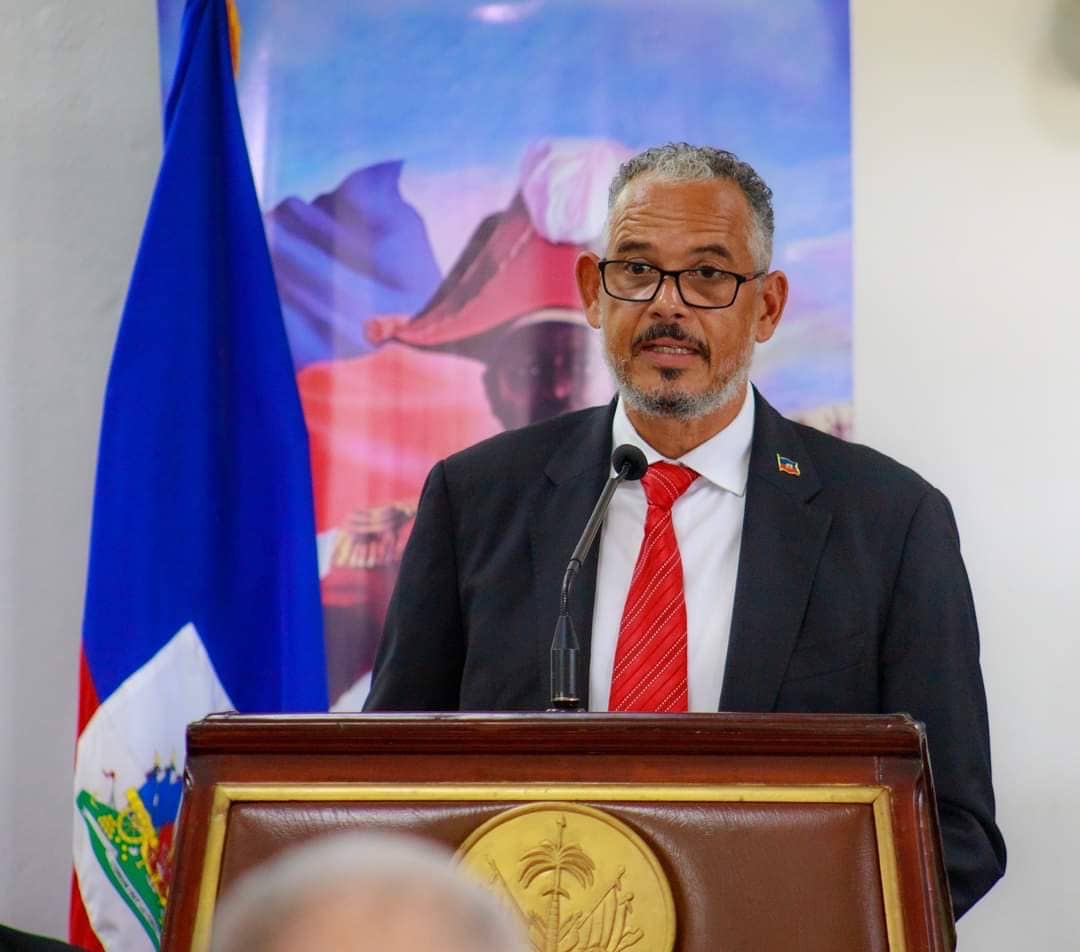










Port-au-Prince, December 11, 2025.- Guest of Magik 9 this Thursday 11 December, the former Minister of Culture Pradel Henriquez recalled that the United Nations Educational, Scientific and Cultural Organization (UNESCO) did not recognize the direct compass of Nemours Jean-Baptiste, a label protected by copyright, but the compas of Haiti as a whole. He outlined the national process initiated since 2020, including the creation of the « Compas month »and emphasized the central role of departmental officials in the assembly and defence of intangible heritage records.
The recognized compass: a distinction that concerns the "compass of Haiti"
Pradel Henriquez wanted to dispel a major misunderstanding: it is not the direct compass that appears on the list of the intangible heritage of humanity. The label « direct compass », created by Nemours Jean-Baptiste, is protected in the United States, which prevents the Haitian state from using it officially in an international process.
In order to circumvent this legal barrier, the Ministry has constructed the concept of « compass in Haiti », which includes the direct compass and all its evolutions: compass mamba, compas creole, compas grouillade, and other variations from this musical tradition.
A national process launched in 2020
The former minister explained that international recognition first requires national recognition. As of March 2020, in the midst of a pandemic, the Department introduced the « Compas month », intended to mobilize communities around this heritage and prepare the application.
The activities were connected to two symbolic dates:
- 21 June: Music Festival;
- 26 July: Compas Day, celebrating the creation of the genre by Nemours Jean-Baptiste.
These initiatives were complemented by debates, cultural activities and major musical events with various cultural actors.
UNESCO and OIF, key partners in heritage policy
According to Henriquez, the compass file was part of a comprehensive strategy of the ministry to submit several elements of Haitian heritage to international bodies. In this dynamic, at least seven elements were worn: joumou soup, kassav, rara, cut metal, Jacmel carnival and papier-maché, clerines of Haiti, as well as compass.
He recalled that the recognition of intangible heritage is based on a constant partnership with UNESCO and the International Organisation of la Francophonie (OIF).
A sustained tribute to departmental officials
The former minister stressed the decisive role of the officials of the Ministry of Culture, often forgotten at official celebrations. He cited several officers and directors who wrote, monitored and finalized files, often under pressure and discretion.
He illustrated these difficulties with the anecdote of the Soup joumou, whose national recognition was signed in extremis in December 2021, after the dossier had been found and printed urgently.
The Ministry, a central player in musical evolution
Henriquez also recalled that the Ministry of Culture has played and must continue to play a crucial role in the development of Haitian music, citing in particular the institutional support provided once to major groups such as Carimi or Passion de Montréal as part of the Festi-Été festival.
W. A.