




















Cotonou, 24 November 2025.- As Africa prepares to generate 230 million digital jobs by 2030, the digital divide still threatens to exclude nearly one billion Africans. In Cotonou, Benin's economic capital, on 17 and 18 November 2025, governments, experts and partners discuss solutions to accelerate the digital transformation of the continent. In Haiti, where the first National Summit on Artificial Intelligence (AI) is held simultaneously, the Bank of the Republic of Haiti (BRH) advocates a proactive strategy based on innovation, training and youth as a lever of national metamorphosis.
The digital revolution in Africa is undergoing a decisive phase. With 60 per cent of its population under the age of 25, the continent has exceptional demographic potential, but it remains largely untapped. Despite a significant increase in Internet penetration from 3.2 per cent in 2005 to 40 per cent in 2024, more than 900 million people remain offline, constrained by costs, lack of skills or lack of infrastructure. In rural areas, access is only 28%.
However, the prospects are great: digital transformation could generate 230 million jobs in the coming years, thanks to the growth of digital services, e-commerce and artificial intelligence. Already, several countries are showing the way. In Benin, more than 250 public services are now available online, 68 municipalities have been connected to fibre, and mobile coverage covers 92 per cent of the country.
Building an integrated African digital market
The Cotonou regional summit highlights the challenges of a harmonised African digital market. The African Union, with its Digital Transformation Strategy 2020-2030, is aiming for a unified space where data flows, platforms are interoperable and start-ups can develop without borders. Artificial intelligence, whose African market is valued at $2 billion in 2025, is a powerful lever to accelerate this integration.
Local innovations bear witness to this: voice recognition in Benin, deployment of AI in agriculture or education, digital health tools adapted to regional realities. However, to generalize these advances, the continent must invest in connectivity infrastructure, digital skills and a protective regulatory framework, including cybersecurity.
Haiti: a digital transformation driven by youth
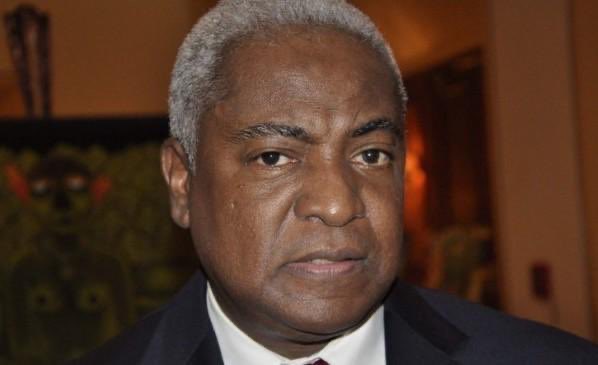
In parallel with the Cotonou Summit, Haiti is organizing for the first time a national event dedicated to artificial intelligence: Ayiti IA 2025. In his speech, the governor of BRH, Ronald Gabriel, recalls that the AI represents for Haiti a historic opportunity of « overcoming certain structural constraints and modernising our institutions ».
The BRH has been engaged for several years in the construction of a Haitian technological ecosystem. It relies on:
- the training of its managers on the bases of AI, governance and cybersecurity;
- partnerships with ESIH, Unitech, ISTEAH and the Faculty of Science to train human resources in STIM;
- The BRH Research and Development Fund, created in 2019 to support innovation;
- the promotion of human capital as an essential driver of development.
For Ronald Gabriel, only a proactive approach will allow Haiti to quickly bridge its digital divide. Youth, « scale factor » The country must be at the centre of this strategy, in order to pave the way for a real technological leap.
Whether it is Africa or Haiti, the message remains the same: the future is digital, and it is now being built. Governments, businesses, financial institutions and civil society must work together to make digital transformation accessible, secure and inclusive.
The digital revolution is a historic opportunity. But if it is to become a lever for growth, jobs and reducing inequalities, it must be accompanied by ambitious public policies, structural investment and a common commitment to innovation.
W.A.